
On-Page SEO Checklist for Beginners to Improve Rankings |
If you have a website or blog and want it to appear on Google, learning on page SEO is one of the smartest steps you can take. Many beginners focus only on posting content, but without proper SEO optimization, even great content may never reach the right audience.
This guide on on page SEO checklist for beginners is written in a simple, conversational, and practical way. Whether you are a student, blogger, entrepreneur, or digital marketing learner, this article will help you understand what is on page SEO, why it matters, and how to apply it step by step to improve rankings and traffic.
What Is On Page SEO?
On-page SEO means optimizing everything inside your website to help search engines understand your content better and rank it higher. These SEO on page activities are fully under your control and focus on improving both search visibility and user experience.
It includes tasks such as:
- Improving page content
- Using proper headings (H1, H2, H3)
- Optimizing images and URLs
- Enhancing page speed and mobile usability
In simple terms, on page SEO optimization helps Google clearly understand:
- What your webpage is about
- How valuable and relevant it is for users
When done correctly, strong on page SEO elements make your website easier to read, easier to navigate, and more useful resulting in better rankings and higher engagement.
Marketers on a budget can learn how to do free SEO in 2026 using smart tools and organic strategies.
On Page SEO vs Off Page SEO
To fully understand on page SEO checklist for beginners, it’s important to know how on page SEO differs from off page SEO. Both are essential parts of SEO optimization, but they work in different ways.
On Page SEO
On page SEO includes all the SEO on page activities you perform within your own website. These are elements you can directly control and improve.
- Optimizing content with relevant keywords
- Improving title tags, meta descriptions, and headings
- Enhancing user experience, page speed, and mobile usability
- Structuring URLs and internal links properly
On page SEO focuses on on page SEO elements that help search engines understand your content and improve rankings.
Off Page SEO
Off page SEO refers to actions taken outside your website to build authority and trust.
- Earning backlinks from other websites
- Brand mentions and online reviews
- Social media shares and referrals
Off page SEO strengthens your website’s credibility, but it is only effective when your on page SEO optimization is done correctly.
Why On Page SEO Comes First
While both strategies are important, on page SEO is the foundation of SEO for beginners. Without strong on page SEO factors like quality content, proper keywords, and optimized pages, off page efforts won’t deliver maximum results.
Simple rule:
First fix your website using a solid on page SEO checklist, then invest time in off page SEO for long term growth.
For designers and marketers looking for tools, check out the 25 best Canva alternatives in 2025 to create stunning visuals for campaigns.
Why On-Page SEO Matters for Beginners
If you are just starting your SEO journey, on-page SEO optimization is the fastest and most effective way to see real results. Unlike off page efforts, on page improvements are fully under your control and form the foundation of long-term SEO success.
1. Increases Website Visibility on Search Engines
Well optimized on page SEO elements such as title tags, headings, content, and URLs help search engines clearly understand your page topic. When Google can crawl and index your site properly, your pages have a much higher chance of appearing in relevant search results. This is why on-page SEO is essential in any SEO checklist for beginners.
2. Creates a Better User Experience
One major goal of on page SEO techniques is to improve how users interact with your website. Clear content structure, easy navigation, fast loading pages, and mobile friendly design make visitors stay longer. A better user experience also helps reduce bounce rate, which directly supports stronger on page SEO factors.
3. Helps Achieve Higher and More Stable Rankings
Search engines reward websites that follow a proper SEO optimization checklist consistently. When your content is well structured, keyword-optimized, and user focused, it sends positive signals to Google. Over time, these on page SEO activities lead to improved rankings, more organic traffic, and sustainable growth especially for beginners learning how to do on page SEO the right way.
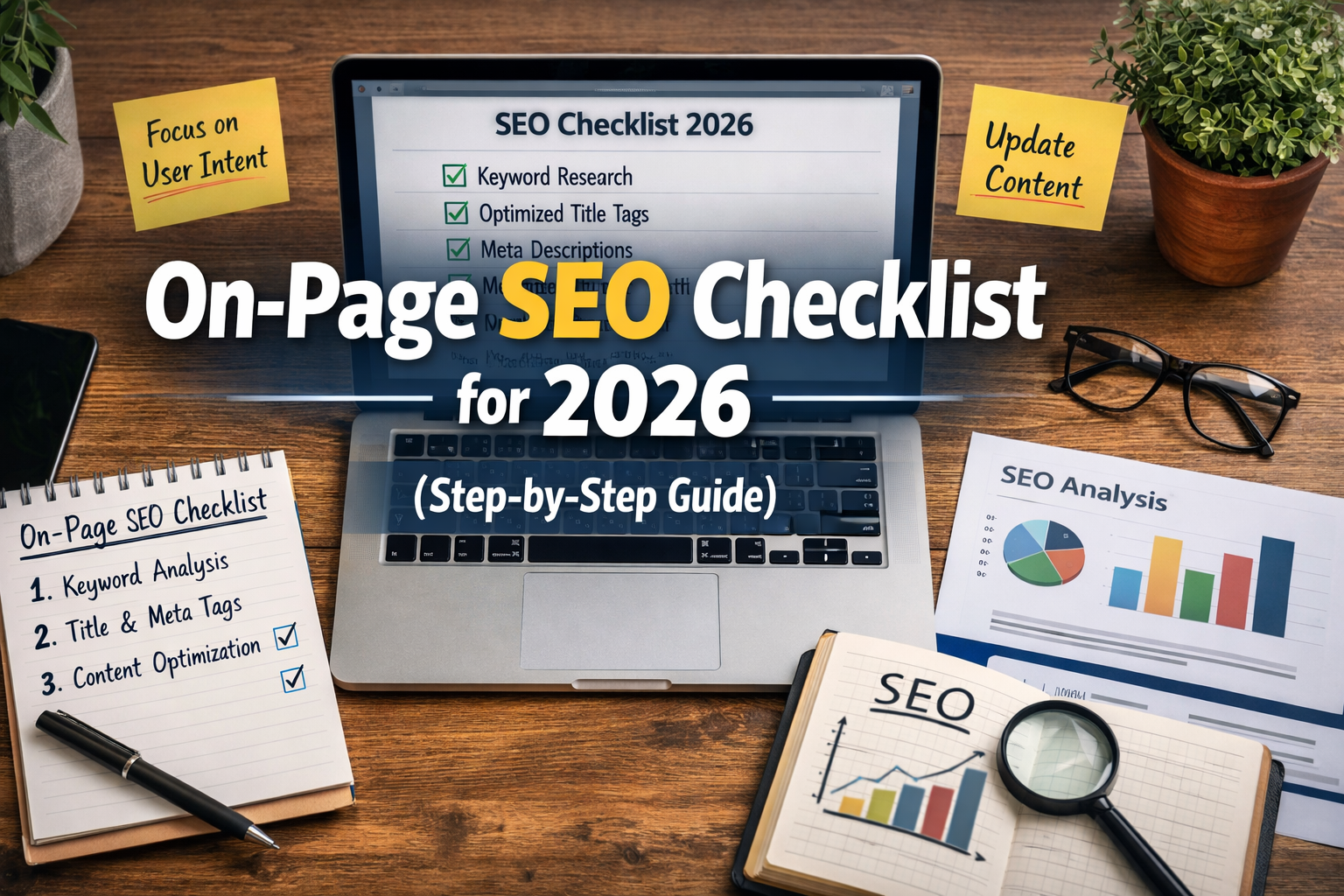
On-Page SEO Checklist for Beginners (Step-by-Step)
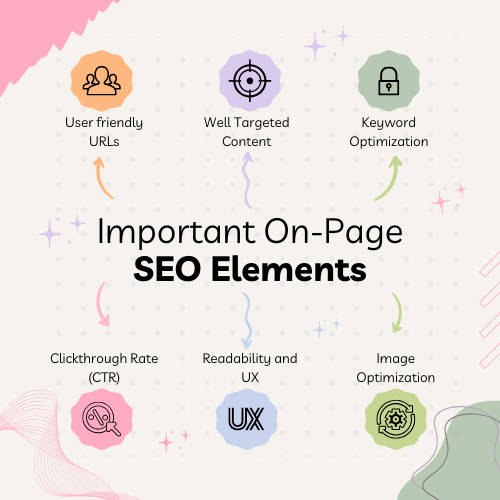
This is the core of on-page SEO optimization and the section every beginner should follow carefully. These onpage SEO activities help search engines understand your content while also improving user experience. When done correctly, this on page checklist can significantly improve rankings and organic traffic.
1. Keyword Research Basics
Keyword research is the foundation of all on-page SEO techniques. If you target the wrong keywords, even the best content will struggle to rank.
Best practices for beginners:
- Focus on one primary keyword per page to avoid confusion
- Use LSI and related keywords naturally throughout the content
- Understand search intent (informational, commercial, navigational)
- Avoid keyword stuffing; clarity matters more than repetition
Example:
Primary keyword: on-page SEO checklist for beginners
Supporting keywords: on page checklist, on-page SEO techniques, on-page SEO factors
Choosing the right keywords helps attract relevant website traffic, not random visitors.
2. SEO Friendly Title Tags
Title tags are one of the most important on page SEO elements because they directly impact rankings and click through rate (CTR).
Title tag optimization checklist:
- Place the primary keyword at the beginning if possible
- Keep the title under 60 characters
- Make it engaging, clear, and benefit-driven
- Avoid duplicate titles across pages
Optimized Example:
On-Page SEO Checklist for Beginners: Easy On-Page SEO Techniques
A well optimized title improves visibility, attracts clicks, and strengthens your overall SEO optimization checklist.
Marketers on a budget can learn how to do free SEO in 2026 using smart tools and organic strategies.
3. Meta Description Optimization
Meta descriptions may not be a direct ranking factor, but they play a powerful role in attracting clicks from search results. A well written meta description can significantly improve CTR, which indirectly supports on-page SEO optimization and overall page performance.
Best practices for meta descriptions:
- Keep the length between 140–160 characters
- Naturally include your primary keyword such as on-page SEO checklist for beginners
- Clearly explain the value or solution the page offers
- Use action oriented language to encourage clicks
Example:
Learn the complete on-page SEO checklist for beginners to improve rankings, traffic, and website visibility step by step.
4. URL Structure Best Practices
URL structure is an important on-page SEO factor that helps both users and search engines understand your page topic at a glance. Clean and keyword focused URLs improve usability and SEO performance.
SEO friendly URL guidelines:
- Use short, readable URLs
- Include your main keyword
- Separate words with hyphens
- Keep URLs lowercase
Good URL example:
yourwebsite.com/on-page-seo-checklist
Avoid these mistakes:
- Long and confusing URLs
- Random numbers, dates, or special characters
- Unnecessary words that add no SEO value
A clean URL is a small but essential part of effective seo on page activities and helps strengthen your overall on page checklist strategy.
5. Proper Use of H1, H2, and H3 Headings
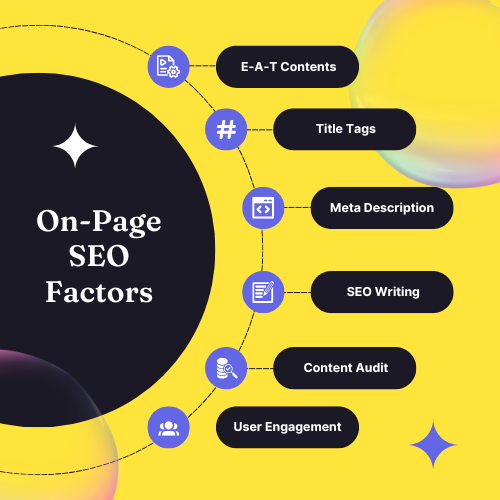
Headings play a crucial role in both user experience and on-page SEO optimization. They help readers scan your content easily and allow search engines to understand the structure of your page.
Best heading practices for beginners:
- Use only one H1 tag per page (usually for the main title)
- Apply H2 headings for major sections of your content
- Use H3 headings to break H2 sections into clear subtopics
- Keep headings descriptive and keyword-relevant
Well structured headings are an essential part of seo on page activities and improve readability, engagement, and search engine understanding of your content.
6. Content Optimization (Keyword Placement & Readability)
Content optimization is one of the most important on-page SEO factors. Even the best keywords won’t help if the content is hard to read or doesn’t provide value.
On-page SEO content checklist:
- Place the primary keyword within the first 100 words
- Use related keywords naturally throughout the content
- Avoid keyword stuffing focus on flow and clarity
- Write short paragraphs for easy reading
- Use bullet points and subheadings to improve structure
Search engines prioritize helpful, user focused content that answers questions clearly. When your content is readable, relevant, and optimized, it performs better across all on-page SEO techniques and drives long-term organic traffic.
7. Internal Linking Strategy
An effective internal linking strategy is a core part of on-page SEO optimization. Internal links help both users and search engines navigate your website easily and understand which pages are most important.
Why internal linking matters in on-page SEO:
- Strengthens overall site structure
- Keeps visitors engaged and increases time on site
- Passes SEO value (link equity) across pages
- Helps search engines crawl and index content faster
Pro Tip:
While following an on page checklist, always link related blog posts using descriptive anchor text instead of generic words like “click here.” This improves relevance and supports better rankings for important keywords.
Stay ahead by learning the future trends in digital marketing 2026 including AI, automation, and personalization.
8. Image Optimization (Alt Text & Size)
Image optimization is one of the most ignored yet powerful on-page SEO factors. Heavy or unoptimized images can slow down your website, negatively affecting rankings and user experience.
On-page SEO checklist for images:
- Compress images to reduce file size without losing quality
- Use clear, descriptive file names (e.g., on-page-seo-checklist.png)
- Add keyword optimized alt text for better accessibility and SEO
Example of SEO friendly alt text:
On page SEO checklist for beginners infographic
Optimized images improve page speed, enhance on page SEO techniques, and help your content appear in Google Image search results.
9. Page Speed Optimization
Page speed plays a crucial role in on-page SEO optimization and is a confirmed Google ranking factor. If your website loads slowly, users are more likely to leave, increasing the bounce rate and reducing engagement.
To improve page speed:
- Optimize and compress images without losing quality
- Enable browser caching for faster repeat visits
- Remove or limit unnecessary plugins and scripts
- Use lightweight themes and clean code
A fast-loading website enhances user experience, improves on-page SEO factors, and helps your pages rank higher in search results.
10. Mobile Friendly Design
With over 60% of searches happening on smartphones, mobile optimization is no longer optional. A mobile friendly website is a core part of on page SEO elements and directly impacts rankings.
Ensure your website has:
- A responsive design that adapts to all screen sizes
- Clear, readable text on small screens
- Simple menus and easy navigation for mobile users
Ignoring mobile optimization is one of the biggest on page SEO mistakes. A mobile friendly site improves usability, boosts engagement, and supports better SEO on page activities for long term success.
Beginners should first understand SEO (Search Engine Optimization) to rank websites higher on Google and drive organic traffic.
11. User Experience & Engagement Signals
User experience is a strong on-page SEO factor that directly affects how your pages perform on Google. Search engines closely monitor how visitors interact with your website to judge content quality and relevance. If users enjoy your page, stay longer, and engage more, Google sees your site as valuable.
Key engagement signals Google looks at:
- Low bounce rate in on-page SEO – visitors don’t leave immediately
- High time on page – users spend more time reading your content
- User actions – scrolling, clicking internal links, and interacting with elements
A clean layout, fast loading speed, and well-structured content improve engagement in on-page SEO. When users find what they’re looking for easily, rankings naturally improve.
12. Reduce Bounce Rate With Better Content
Reducing bounce rate is an essential part of on-page SEO optimization. When visitors leave your page without taking action, it signals poor relevance or experience.
Effective ways to reduce bounce rate in on-page SEO:
- Create content that matches search intent exactly
- Use clear H2 and H3 headings to guide readers
- Add images, infographics, or short videos
- Improve readability with short paragraphs and bullet points
- Place internal links to related content
High quality, user focused content keeps visitors engaged longer and strengthens your on page SEO techniques, helping your pages rank higher and convert better.
If you’re confused about learning modes, compare online vs offline digital marketing courses to choose what suits your schedule and goals.
13. Schema Markup Basics (Optional but Powerful)
Schema markup is a type of structured data that helps search engines clearly understand what your content is about. While it’s not mandatory for beginners, adding schema is a smart on-page SEO optimization technique that can improve how your pages appear in search results.
When implemented correctly, schema can increase visibility, improve click-through rate, and support your overall on page SEO checklist for beginners.
Beginner Friendly Schema Types
- FAQ Schema
Ideal for question-based content. It allows your FAQs to appear directly on Google with expandable answers, which boosts visibility and user engagement. This is one of the easiest on-page SEO elements to implement. - Article Schema
Best for blog posts and educational content. Article schema helps search engines identify your page as informative content, supporting better indexing and improving trust signals an important part of on-page SEO factors.
Common On-Page SEO Mistakes to Avoid
Many beginners follow an on-page SEO checklist for beginners but still fail to rank because of avoidable mistakes. These errors can weaken on-page SEO optimization, reduce visibility, and increase bounce rate. Let’s look at the most common on-page SEO mistakes and how to fix them.
Keyword Stuffing Instead of Smart Optimization
One of the biggest mistakes in seo on page activities is overusing keywords. Stuffing the same keyword again and again makes content sound unnatural and harms readability. Search engines now focus on relevance and user experience, so proper keyword placement matters more than frequency. Always use keywords naturally as part of strong on-page SEO techniques.
Duplicate or Thin Content
Publishing copied or low value content seriously damages on-page SEO factors. When multiple pages have the same or similar content, search engines struggle to understand which page to rank. Always create original, helpful content that adds value. High-quality content is the backbone of every effective SEO checklist for beginners.
Ignoring Mobile Optimization
Many beginners forget that most users browse on mobile devices. A website that isn’t mobile-friendly leads to poor user experience, higher bounce rate, and lower rankings. Mobile responsiveness is now a key part of on-page SEO elements and plays a major role in Google’s ranking system.
Missing or Poorly Optimized Meta Tags
Skipping title tags or meta descriptions is a common on page checklist mistake. These elements help search engines understand your page and encourage users to click. Well written meta tags improve visibility and click-through rate, making them essential for proper on-page SEO optimization.
To build advanced expertise, learn about the Master’s in Digital Marketing course and how it helps you land leadership roles.
On-Page SEO Tools for Beginners
Using the right tools can simplify how to do on-page SEO and help beginners apply their on page SEO checklist more effectively. These tools give clear data, actionable insights, and easy optimization suggestions even if you’re just starting out.
Google Search Console
Google Search Console is a must-have tool for on-page SEO optimization. It helps you understand how Google views your website.
Key benefits:
- Monitor website performance in Google search
- Identify indexing and crawling issues
- Track keywords and page impressions
- Improve critical on-page SEO factors like page errors and mobile usability
This tool is essential for managing core onpage SEO activities.
Browse all available programs on the Code with TLS courses page to find the right digital marketing, SEO, or tech course for you.
Google Analytics
Google Analytics helps you analyze how users interact with your website.
Why it matters for on-page SEO:
- Track website traffic and user behavior
- Identify high and low-performing pages
- Measure engagement, bounce rate, and time on page
- Improve content based on real user data
It supports smarter SEO on page activities by focusing on user experience.
Yoast SEO / Rank Math
These are beginner-friendly WordPress plugins designed to simplify on page SEO elements.
Key features:
- Optimize title tags and meta descriptions
- Check keyword placement and readability
- Generate XML sitemaps
- Follow a built in SEO optimization checklist
Perfect for beginners learning on-page SEO techniques without technical complexity.
PageSpeed Insights
PageSpeed Insights helps improve website speed an important on-page SEO factor.
What it helps with:
- Analyze page loading speed
- Identify performance issues
- Get actionable suggestions to improve speed
- Enhance mobile and desktop user experience
A faster website leads to better rankings and supports effective on-page SEO optimization.
FAQs
1. What is on-page SEO in digital marketing?
On-page SEO is the process of optimizing individual web pages so they rank higher on search engines and attract relevant traffic. It focuses on content, keywords, HTML tags, and overall user experience.
2. Why is an on-page SEO checklist important for beginners?
An on-page SEO checklist for beginners helps new learners follow a step by step structure to optimize pages correctly without missing essential on page SEO elements.
3. What are the most important on-page SEO elements?
The key on-page SEO factors include title tags, meta descriptions, headings (H1–H3), keyword optimized content, URL structure, internal links, image alt text, and page speed.
4. What is the difference between on-page SEO and off-page SEO?
On-page SEO optimization focuses on changes made within your website, while off-page SEO deals with backlinks, brand mentions, and external promotion. Both are important for ranking.
5. How many keywords should I use in on-page SEO?
For effective seo on page activities, use one primary keyword and 3–5 related keywords naturally. Avoid keyword stuffing, as it can harm rankings.
6. How long does on-page SEO take to show results?
On-page SEO results usually start appearing within 2–8 weeks, depending on competition, content quality, and how well your SEO optimization checklist is implemented.
7. Can beginners do on-page SEO without technical knowledge?
Yes. Beginners can easily learn how to do on-page SEO using simple tools, plugins, and a basic SEO checklist for beginners without coding skills.
8. Is content optimization part of on-page SEO?
Absolutely. Content optimization is a core part of on-page SEO techniques, including keyword placement, readability, formatting, and matching search intent.
9. Does on-page SEO help reduce bounce rate?
Yes. Proper on-page SEO optimization improves user experience, page speed, and content relevance, which helps reduce bounce rate and increase engagement.
10. Is on-page SEO enough to rank on Google?
On-page SEO builds the foundation, but for long-term success, it should be combined with off-page SEO, technical SEO, and consistent content marketing.
Visit the official website of Code with TLS to explore their certifications, trainers, and placement support.
Conclusion
Mastering on-page SEO checklist for beginners is the first step toward ranking higher on Google. From keyword research and content optimization to page speed and mobile friendliness, every on-page SEO activity plays a role in your website’s success.
If you apply this on page checklist consistently, you’ll see improvements in visibility, traffic, and engagement.
Want to learn SEO professionally and grow faster?
Start practicing these on page SEO techniques today, explore advanced strategies, or consider professional SEO training to turn your skills into real career or business growth.
If you want to enroll or ask questions, use the Code with TLS contact page to connect with the admissions team.
Call Us
+91 85278 66980
Email Us
Visit Us
2/81-82, Ground Floor, Lalita Park, Gali No - 2, Laxmi Nagar, New Delhi - 110092
Recent Posts
 Understanding AIO (AI Overviews) and Its Impact on SEO in 2026
 Difference Between SEO and SXO: Complete Guide for 2026
 The Power of Search Experience Optimization (SXO)
 What is Agent Experience Optimization (AXO)? A Complete Guide for 2026
 What AIO, GEO, AEO, and SXO Actually Mean — and Why Marketers Should Care
 Google Ads vs Meta Ads — Which Is Better for Your Business in 2026?
 On-Page SEO Checklist for 2026 (Step-by-Step Guide)
 What is GMB & How to Rank on Google My Business in 2026 (Complete Guide)
 Google Digital Garage: Courses List, Certificates & Career Opportunities
 Prompt Engineering for Digital Marketers: Boost AI Results