
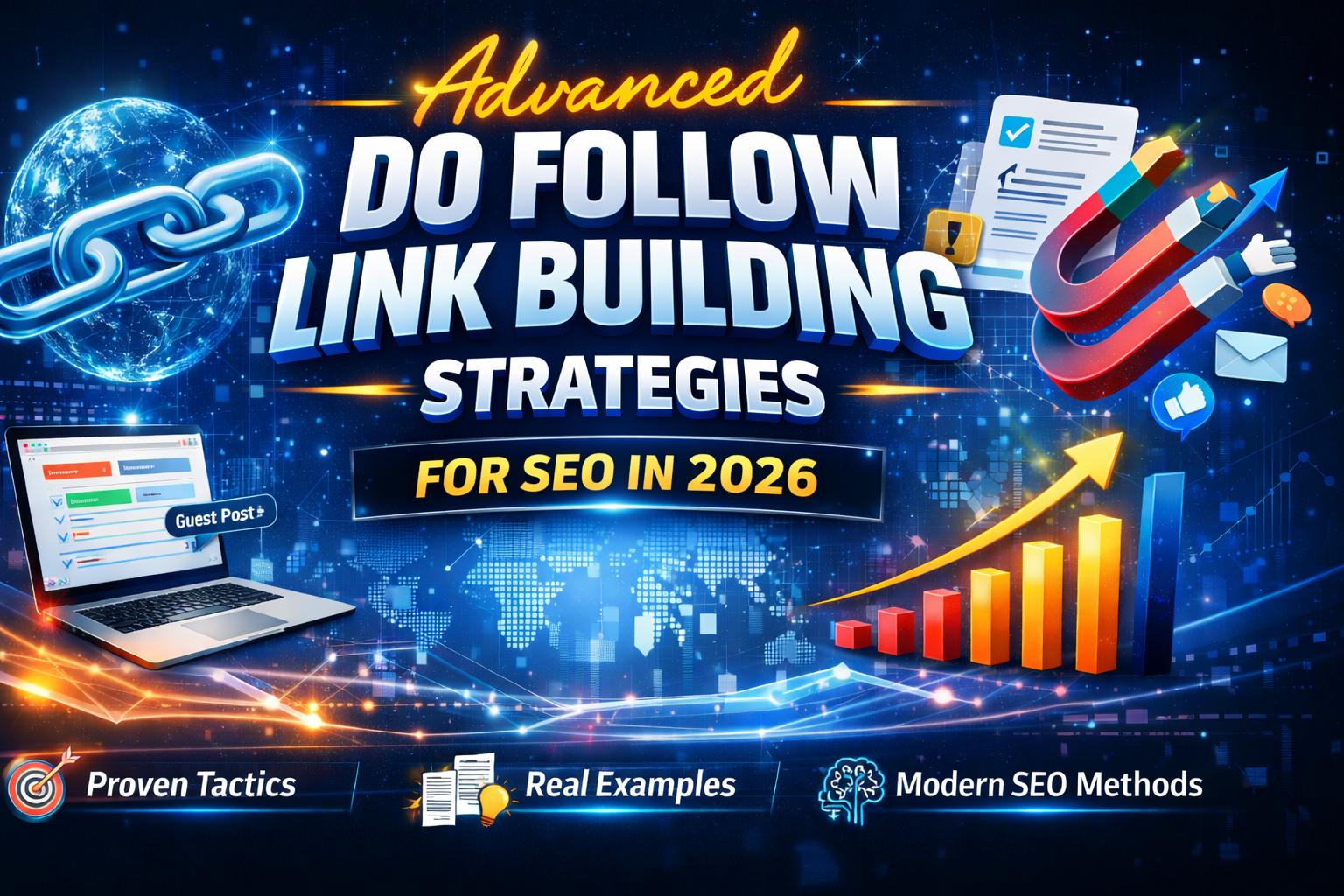
Advanced Do Follow Link Building Strategies for seo in 2026
Search has changed fast. AI overviews, entity signals, and intent mapping now influence who earns the top spots. But one factor still separates pages that merely exist from those that consistently rank: high-quality backlinks.
In 2026, link building isn’t about numbers. It’s about contextual backlinks, editorial trust, topical authority, and relevance. If you want consistent rankings, qualified referral traffic, and long-term brand credibility, you need modern do follow backlink building strategies that match how Google evaluates authority today.
This guide walks you through the backlink building techniques, SEO link building strategies, and high authority backlinks that are working right now—with practical steps you can apply immediately.
Discover how AI is reshaping education with the digital marketing course with AI that integrates cutting-edge tools and automation.
Do Follow vs No Follow Backlinks: Key Differences Explained
In simple terms, a do follow backlink is a standard hyperlink that allows search engines to pass authority (often called PageRank) from the referring page to your website. When a trusted site links to you with a do follow link, it acts like a public vote of confidence strengthening your credibility, improving crawl paths, and supporting higher rankings. This is why do follow links remain central to effective do follow backlink building strategies.
A no follow backlink, on the other hand, includes an attribute that signals search engines not to pass ranking authority directly. While it doesn’t transfer PageRank in the same way, it still plays an important role in a natural link profile. No follow links can drive targeted referral traffic, improve brand visibility, and contribute to overall trust signals that search engines evaluate.
In 2026, Google looks beyond just link attributes. It evaluates the context, relevance, and editorial placement of a link. That means a contextual, niche relevant do follow backlink from a trusted page can influence rankings far more than dozens of low quality links. Smart SEOs now focus on earning links that make sense for users first because that’s exactly what modern algorithms reward.
Why Do Follow Links Still Matter in 2026 (AI Era)
In 2026, search is powered by AI summaries, entity mapping, and intent prediction but the foundation of trust hasn’t changed. Do follow backlink building strategies still play a decisive role because search engines rely on trusted citations to decide which sources deserve visibility inside AI-generated answers.
AI overviews don’t invent authority. They pull from it. When reputable websites link to your content with do-follow links, they signal credibility that algorithms can verify. These contextual backlinks act as proof that your content is worth referencing.
Strong links also help build entity authority. When multiple relevant sites cite your brand or content, search engines understand who you are, what you specialize in, and where you fit within a topic. This strengthens your topical authority, especially when links come from pages closely related to your niche.
Quality do-follow backlinks also improve crawling and content discovery. Search bots find, revisit, and prioritize pages that are frequently referenced across the web.
And beyond rankings, there’s real value: referral traffic from relevant pages converts far better than random visits.
In the AI era, links are no longer just SEO votes they’re proof of reputation, relevance, and expertise.
If you’re new to video promotion, start with our beginner-friendly explanation of what is YouTube marketing to grow audiences and engagement.
1) Guest Posting on Niche Relevant Sites
Guest posting is still one of the most reliable do follow backlink building strategies in 2026 but the rules have changed. It’s no longer about publishing everywhere. It’s about publishing where your audience already trusts the content. A single article on a highly relevant blog with real readers can outperform ten posts on generic sites.
What Works Now
- Fewer guest posts, but on highly niche, topically aligned websites
- Content written for real readers, not just for links
- Natural, contextual do-follow backlinks placed where they add value
- Promotion after publishing to drive traffic and engagement signals
Actionable Steps
1) Find niche blogs with real traffic
Search for blogs in your industry that publish consistently and have engaged audiences. Check if posts receive comments, shares, or ranking keywords. These signals show the site has genuine authority.
2) Pitch topic gaps, not generic ideas
Avoid overused titles. Look for content gaps using keyword research and pitch a topic that complements their existing content while matching your expertise.
3) Add a contextual do-follow link inside the content
Place your link naturally within the article where it supports the reader. Avoid author-bio links only. Contextual placement improves link value and user trust.
4) Promote the post after it goes live
Share it on social media, email newsletters, and communities. Traffic and engagement strengthen the link’s SEO impact.
Real Example
Imagine you run a SaaS SEO blog. You contribute a detailed article on a marketing analytics website about attribution modeling in modern SEO campaigns. Inside the article, you reference your in-depth guide on tracking organic conversions. The link fits naturally, helps readers, and passes strong contextual authority.
This approach not only earns a powerful backlink but also builds topical authority, referral traffic, and brand credibility exactly what modern do follow backlink building strategies aim to achieve.
2) Digital PR (Data-Driven Stories That Earn Editorial Links)
What works in 2026: Journalists, editors, and AI curated news feeds prioritize original data. If you publish credible numbers with clear insights, publications will reference you naturally earning high authority, contextual do-follow backlinks without begging for links.
This is one of the most reliable do follow backlink building strategies because you’re not asking for a favor you’re offering a story.
How to Execute (Step by Step)
1) Create a small but credible dataset
Run a focused survey, analyze internal data, or compile industry benchmarks. Even 150–300 responses are enough if the audience is relevant.
2) Turn numbers into a newsworthy story
Don’t publish raw stats. Extract insights:
- Trends
- Surprises
- Contradictions
- Predictions
3) Package it like a media asset
Include charts, quotes, key findings, and a short methodology. Make it easy to cite.
4) Pitch journalists and niche editors
Write a tight email: 3 findings, why it matters now, and a link to the report.
5) Earn editorial mentions and do-follow links
When your data supports their article, they cite your page as the source.
This step-by-step guide on Meta Ads automated rules guide 2026 helps you scale campaigns using automation and smart bidding.
Example Angle
“2026 SEO Trends Survey of 300 Marketers: 68% Shift Budget from Ads to Organic Search”
This headline is:
- Timely
- Data backed
- Relevant to marketing publications
- Perfect for citation in trend articles
Pro Tips to Maximize Links
- Add a statistics page on your site (great for recurring links)
- Publish annual updates to make it link-worthy every year
- Offer expert quotes journalists can copy-paste
- Share the study on professional communities for initial traction
When done right, Digital PR doesn’t just build backlinks it builds brand authority, topical trust, and long term citations that compound your SEO results.
3) HARO Alternatives (Expert Quote Platforms That Win Links in 2026)
HARO changed. What hasn’t changed is this: journalists still need expert voices. In 2026, the opportunity has simply moved from crowded inboxes to niche expert quote platforms, journalist communities, and topic-specific request boards where quality answers get picked fast.
This is one of the most underrated do follow backlink building strategies because the links you earn are editorial, contextual, and trust rich exactly what modern Google signals reward.
How to Turn Expert Quotes into Do-Follow Backlinks
1) Join curated expert quote platforms
Sign up on platforms and communities where reporters, bloggers, and editors request insights from subject matter experts in real time.
2) Respond fast with sharp, usable insights
Journalists prefer answers they can paste directly into their article. Give 3–5 sentences of clear, original expertise no fluff.
3) Build a credibility-first profile
Your bio should clearly state who you are, what you specialize in, and why your opinion matters. This increases your selection rate.
4) Earn contextual citations naturally
When your quote is used, publications often credit you with a do follow link to your site as a source, strengthening your authority and topical relevance.
Pro Tip
Prepare 5–6 ready made expert snippets around your niche topics. When a request appears, you can respond within minutes speed dramatically increases acceptance.
This approach blends digital PR, authority link building, and expert positioning into one powerful tactic that continues to work exceptionally well in 2026.
4) Linkable Assets (Tools, Templates, Stats Pages)
What works in 2026: Create resources so useful that other websites want to cite them. These are the quiet heroes of do follow backlink building strategies because they attract links naturally over time.
High Impact Ideas
- Free calculators (ROI, pricing, projections)
- Updated industry statistics pages
- Downloadable templates and checklists
- Simple mini tools that solve one problem well
How to Do It (Action Plan)
1) Build a genuinely useful page
Create something practical that solves a real problem in your niche. Think beyond articles focus on utility. A calculator, a live stats hub, or a ready to use template becomes a linkable asset that supports long-term backlink building.
2) Make it reference-worthy
Add clear data sources, examples, FAQs, and visuals. When your page looks like a reliable reference, bloggers and writers feel confident linking to it as a citation.
3) Reach out to relevant bloggers and publishers
Find articles already covering that topic. Politely suggest your resource as an additional reference that adds value to their readers.
4) Position it as a helpful resource, not a link request
Your pitch should focus on usefulness. When the value is obvious, earning do follow backlinks becomes much easier.
Well built linkable assets don’t just earn links they build topical authority, drive referral traffic, and strengthen your SEO foundation for years.
Prospective students in the capital can explore the best digital marketing institute in Delhi 2026 to choose the right training and placement support.
5) Parasite SEO on Authority Platforms (Smart Authority Leveraging)
Parasite SEO in 2026 is no longer about dumping content on big sites. It’s about strategically publishing high-value, search-optimized content on trusted authority platforms that already rank fast in Google. When done right, this method supports your do follow backlink building strategies by placing contextual references inside content that Google already trusts.
Think of it as borrowing domain strength to amplify your visibility.
Where this works best: reputable publishing platforms, expert communities, knowledge hubs, and user generated content sites that allow contextual do-follow references within valuable content.
Why It Works in 2026
- Authority domains get crawled and ranked faster
- Your content can rank independently on competitive keywords
- Contextual links look natural and editorial
- You gain referral traffic + SEO authority signals
Actionable Steps
1) Publish value-packed, keyword-targeted content
Write genuinely helpful articles optimized for long-tail and problem-solving keywords in your niche. Avoid promotional tone.
2) Optimize to rank the post itself
Use proper headings, internal references (within the platform), and SEO formatting so the post ranks on Google on its own merit.
3) Add contextual references to your website
Naturally mention your guide, tool, case study, or resource where it adds value. The link should feel like a citation, not an insertion.
Example
If you run an SEO blog, publish an article like “Technical SEO Checklist for E-commerce Sites” on a high authority publishing platform. Inside the guide, reference your detailed checklist resource as additional reading. The platform page ranks quickly, and your contextual link passes trust and sends qualified traffic.
Done ethically, Parasite SEO becomes a powerful, sustainable backlink method that blends authority, relevance, and discoverability.
6) Broken Link Building (Still Gold)
What works now: Turning dead, outdated references into opportunities by offering a better, fresher resource. This remains one of the most reliable do follow backlink building strategies because you’re not asking for a favor you’re solving a problem.
Why this tactic wins in 2026
Webmasters hate broken links. They hurt user experience, reduce trust, and can impact SEO. When you show up with a relevant, high-quality replacement, the “yes” becomes easy.
Actionable Steps
1) Find broken links on niche-relevant sites
Use SEO tools or browser extensions to scan resource pages, blog posts, and guides in your niche. Look for 404 errors where a reference used to exist.
2) Create a superior replacement resource
Don’t copy the old page. Build something more updated, more useful, and more comprehensive. Add visuals, examples, stats, or a checklist so it genuinely deserves the link.
3) Reach out with a helpful email
Politely inform the site owner about the broken link and suggest your resource as a replacement. Keep the tone helpful, not promotional.
Example
You find a marketing blog linking to a dead “SEO checklist.” You create an updated 2026 SEO checklist, then email them pointing out the issue and offering your page as a fix.
Because this approach improves their content, conversion rates are naturally higher than cold outreach. It’s value-first outreach aligned perfectly with modern do follow backlink building strategies.
7) Niche Edits (Contextual Insertions)
Niche edits are one of the fastest do follow backlink building strategies because you’re placing your link inside content that already ranks, already gets traffic, and already has trust with search engines. Instead of publishing a new guest post and waiting for it to gain authority, you tap into existing authority.
How it works: You identify a high-ranking article in your niche where your resource genuinely improves the content. Then you suggest a smart update to the site owner that naturally includes your link as a reference.
Action Steps:
- Find ranking pages in your niche
Search for target keywords and identify articles on pages with strong authority and steady traffic. - Spot content gaps or outdated references
Look for sections where data is old, examples are weak, or a resource is missing. - Pitch a value-based update
Reach out with a short, helpful suggestion explaining how your guide, tool, or article enhances their content. - Provide the exact anchor text and placement
Make it easy for the editor by suggesting the precise sentence where your link fits naturally.
Example: If an article discusses backlink methods but lacks updated tactics for 2026, you can recommend adding your guide on modern do follow backlink building strategies as a relevant reference.
Niche edits work because they are contextual, relevant, and editorial three signals Google values highly in modern link evaluation.
Understand the broader effects of technology on careers with our insights on the impact of AI on jobs across industries.
8) Authority Directories (Curated, Not Spam)
In 2026, directory links only work when they come from trusted, human reviewed platforms that exist to help users not manipulate rankings. These authority directories act like credibility hubs where businesses, tools, and professionals are listed because they’re genuinely relevant to a niche.
Think industry associations, startup directories, SaaS listings, professional bodies, and local business registries. A well placed profile here can pass a high quality do follow backlink, strengthen your brand signals, and support your overall do follow backlink building strategies.
How to Use Authority Directories the Right Way
1) Identify Legit, Niche Relevant Directories
Search for directories that are specific to your industry. Look for real traffic, editorial standards, and active listings. Avoid generic submission sites. Keywords like “industry directory,” “startup listing,” “professional association,” and “business registry” help you find quality platforms.
2) Complete Your Profile Thoroughly
Don’t just drop a link. Add your business description, services, categories, logo, contact info, and social profiles. A complete listing increases trust and click-throughs while strengthening your contextual backlink profile.
3) Write a Contextual, Keyword Rich Description
Use natural language to describe what you do. Include relevant terms related to your niche so the listing ranks internally and sends topical relevance signals along with the do follow link.
When done correctly, authority directories become long term assets in your white hat link building plan not just another backlink.
9) Web 2.0 With Value Content (Modern, Authority-First Approach)
In 2026, Web 2.0 is no longer about creating thin, throwaway blogs. The winning move is to build mini authority hubs on trusted publishing platforms pages that genuinely educate readers and earn contextual, do-follow backlinks through value.
Think of each Web 2.0 property as a micro site dedicated to one tight niche. When done right, these pages rank on their own, drive referral traffic, and strengthen your overall do follow backlink building strategies with relevance and trust.
What This Looks Like Today
- A focused profile on a reputable platform
- 5–10 in depth articles around one niche theme
- A clear topical cluster (pillar topic + supporting posts)
- Natural, contextual links pointing to your main site’s resources
Actionable Steps
1) Create high quality niche articles
Write genuinely helpful posts targeting long-tail keywords and LSI terms like contextual backlinks, topical authority, SEO content clusters, editorial links, and authority content marketing. Avoid generic topics solve specific problems.
2) Build topical clusters
Start with a pillar article (e.g., “Complete Guide to Technical SEO in 2026”) and publish supporting posts (site speed, crawl budget, schema, internal linking). Interlink them to form a semantic cluster that search engines understand.
3) Link naturally to your site
Add links only where they enhance the reader’s understanding like referencing your detailed guide, checklist, or tool. Keep anchors natural and varied.
Pro Tip
Update these Web 2.0 articles quarterly. Freshness + relevance turns them into long term assets that continue sending authority and traffic.
Compare modern strategies in our article on AI vs traditional marketing to see how data-driven approaches outperform classic methods.
10) Community Platforms & Forums for Do Follow Backlinks
Community platforms and niche forums have become underrated goldmines for do follow backlink building strategies in 2026. These spaces are filled with real users asking real questions. When you show up with genuinely helpful answers and reference your in-depth guide only where it adds value you earn trust, clicks, and often contextual do-follow links from discussion threads that rank on Google.
How to Do It the Right Way
1) Answer real, niche specific questions
Search for threads related to your expertise and provide detailed, experience based solutions. Avoid generic replies. The more actionable your answer, the more visibility and upvotes it receives.
2) Add your resource as a helpful reference
Instead of dropping links, introduce your guide naturally:
“Here’s a detailed checklist I created that explains this step by step…” This approach fits modern white hat link building and improves acceptance.
3) Build profile credibility first
Stay active. Contribute regularly. Earn trust before sharing links. Profiles with history are more likely to retain contextual do-follow backlinks without moderation issues.
Over time, these threads rank for long tail keywords, bringing consistent referral traffic and strengthening your backlink profile through natural, relevance driven mentions.
11) Resource Page Link Building
Resource pages are curated lists of helpful links. Because they’re handpicked, they often provide editorial do-follow backlinks that boost topical authority and link equity making this one of the most effective do follow backlink building strategies in 2026.
How to do it:
- Search smartly:
keyword + "useful resources"
keyword + "helpful links"
inurl:resources keyword - Pitch a linkable asset (guide, tool, checklist, stats page) not a sales page.
- Email the editor, explain how your content helps their readers, and suggest exact placement.
Tip: Target recently updated pages with niche relevance for higher approval rates.
Backlink Tactics That No Longer Work in 2026 (And Can Hurt Your Rankings)
Search engines in 2026 are exceptionally good at spotting patterns that look manufactured. If a tactic exists only to “create links” and not to create value, it’s a red flag. Many old-school methods that once boosted rankings now trigger link spam signals, dilute topical authority, and can quietly suppress your visibility.
Here are outdated practices to avoid if you’re serious about modern do follow backlink building strategies.
1) Bulk Directory Submissions
Submitting your site to hundreds of low quality directories used to be a shortcut. Today, it signals automation and irrelevance. Unless the directory is curated, niche specific, and human reviewed, it adds zero authority and can harm your link profile.
2) PBN (Private Blog Network) Links
PBN networks leave clear footprints shared hosting, thin content, recycled themes. Google’s systems easily map these patterns. Links from PBNs don’t build trust; they create risk.
3) Fiverr Link Blasts and “1000 Backlinks” Packages
Mass created links from random blogs, profiles, and forums are algorithmically obvious. These links lack context, relevance, and editorial value exactly what modern algorithms look for in quality backlinks.
4) Comment Spam on Blogs
Dropping links in blog comments is no longer seen as engagement. It’s seen as noise. These links are usually no follow, ignored, or flagged as manipulative behavior.
5) Irrelevant Guest Posting
Publishing on any site that accepts content, regardless of niche, weakens your topical authority. In 2026, relevance matters more than domain metrics.
6) Exact Match Anchor Text Abuse
Over-optimizing anchors with the same keyword repeatedly is a classic spam signal. Natural anchors, brand mentions, and contextual phrases are far safer and more effective.
Bottom line: If a tactic focuses on quantity over relevance and editorial value, it’s outdated. Sustainable do follow backlink building strategies prioritize trust, context, and real audience value.
Browse a variety of certified programs on the Code with TLS courses page to find the right digital marketing or tech training for your goals.
Beginner Checklist for Do Follow Backlinks
- Create one linkable asset
- Publish 2 guest posts on niche sites
- Do 10 broken link outreaches
- Submit to 5 authority directories
- Answer 20 community questions
- Pitch 5 resource pages
- Respond to 10 expert quote requests
Consistency beats shortcuts.
FAQs
1. How many do follow backlinks do I actually need?
There’s no fixed number. In modern SEO, a handful of highly relevant, editorial do follow backlinks from trusted sites can outperform hundreds of low quality links.
2. Are no follow links useless for SEO?
Not at all. No follow links still bring referral traffic, brand visibility, and trust signals that support your overall backlink profile.
3. How long does it take to see ranking impact from backlinks?
Most sites notice movement within 4–12 weeks, depending on crawl rate, site authority, and link quality.
4. Is guest posting still an effective backlink method in 2026?
Yes—when done on niche-relevant websites with genuine readership and contextual linking.
5. Which backlink strategy shows results the fastest?
Broken link building and niche edits often deliver quicker wins because you’re adding value to existing content.
6. What type of anchor text is safest for do follow links?
Natural anchors such as brand names, URLs, and contextual phrases are safer than repetitive exact-match keywords.
7. Do backlinks still matter with AI search and Google updates?
Absolutely. AI systems still rely on trusted sources, and backlinks remain a key signal of authority and credibility.
8. Should I prioritize domain authority when building links?
Relevance and content context matter more than just metrics. A niche site with lower authority can be more powerful than a generic high-DA site.
9. Can directories still be used for backlinks?
Only curated, industry specific directories provide value. Mass directory submissions are outdated and risky.
10. What’s the biggest mistake beginners make in link building?
Chasing quantity over quality instead of focusing on sustainable do follow backlink building strategies rooted in relevance and value.
Browse a variety of certified programs on the Code with TLS courses page to find the right digital marketing or tech training for your goals.
Conclusion
In 2026, link building is no longer about chasing numbers. It’s about earning editorial trust through relevance, value, and authority. These do follow backlink building strategies align with modern search signals, AI evaluation, and user intent.
Build assets worth linking to. Reach out with purpose. Focus on context.
If you have questions or need course guidance, reach out via the Code with TLS contact page to connect with the support team.
That’s how rankings are earned now.
Call Us
+91 85278 66980
Email Us
Visit Us
2/81-82, Ground Floor, Lalita Park, Gali No - 2, Laxmi Nagar, New Delhi - 110092
Recent Posts
 Understanding AIO (AI Overviews) and Its Impact on SEO in 2026
 Difference Between SEO and SXO: Complete Guide for 2026
 The Power of Search Experience Optimization (SXO)
 What is Agent Experience Optimization (AXO)? A Complete Guide for 2026
 What AIO, GEO, AEO, and SXO Actually Mean — and Why Marketers Should Care
 Google Ads vs Meta Ads — Which Is Better for Your Business in 2026?
 On-Page SEO Checklist for 2026 (Step-by-Step Guide)
 What is GMB & How to Rank on Google My Business in 2026 (Complete Guide)
 Google Digital Garage: Courses List, Certificates & Career Opportunities
 Prompt Engineering for Digital Marketers: Boost AI Results