
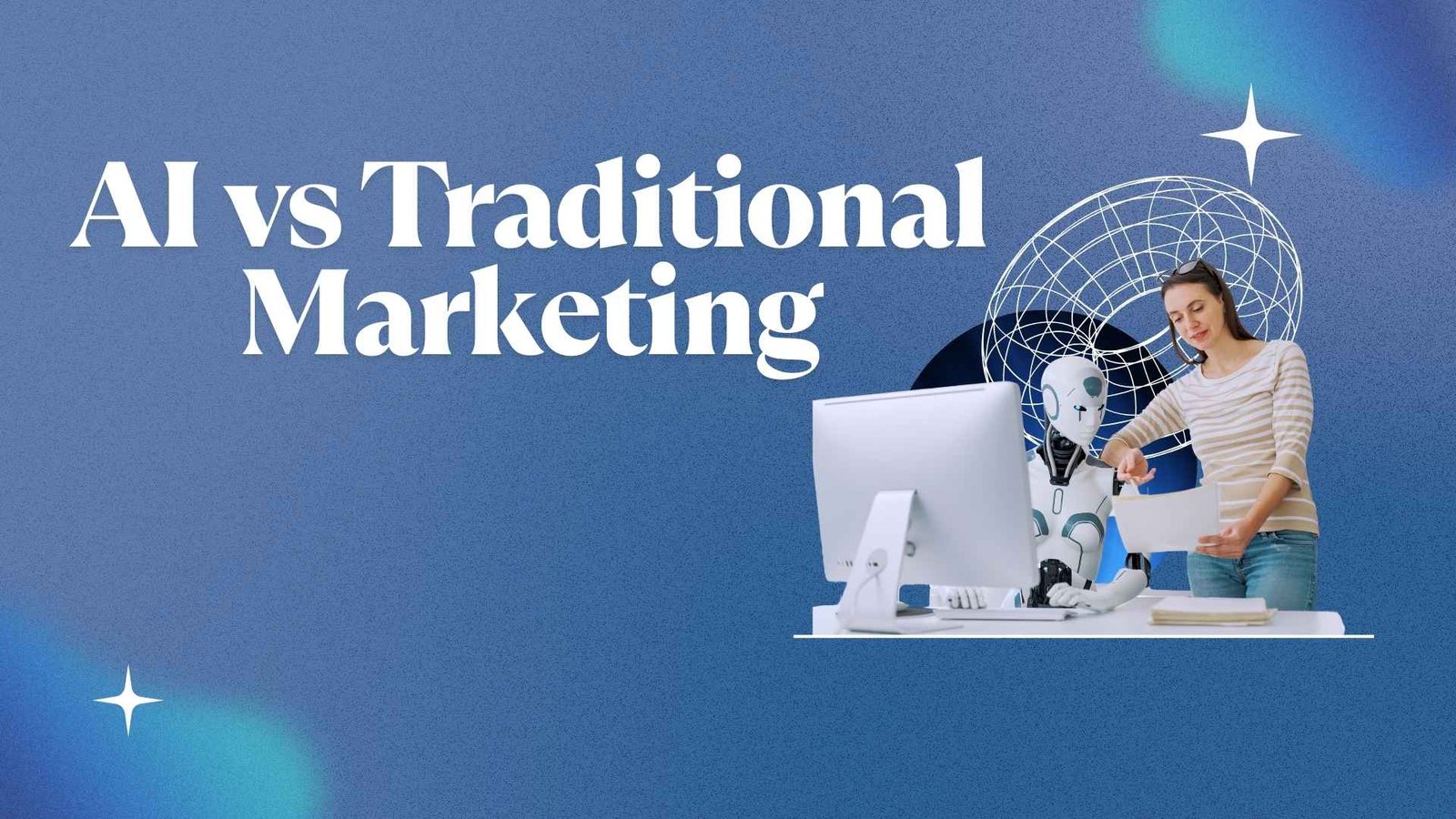
AI vs Traditional Marketing in 2026: Which Gives Better ROI?
The marketing landscape in 2026 looks radically different from just a few years ago. Artificial Intelligence (AI) has moved from experimentation to core business infrastructure, while traditional marketing has evolved into a brand-building support layer.
Today’s real question is no longer “Should we use AI?” but:
How much ROI does AI-powered marketing generate compared to traditional marketing in 2026?
If you’re planning your budget before enrolling, check out our guide on what are the fees of digital marketing course in Delhi for detailed cost insights.
This guide breaks down:
- The latest 2026 trends
- Updated data and performance metrics
- Real ROI comparisons
- Practical adoption strategies
- FAQs for decision makers
2026 Latest Updates in Marketing
1. AI Is Now Core Infrastructure, Not a Competitive Edge
By 2026, Artificial Intelligence is no longer an experimental add on it has become core marketing infrastructure.
- More than 80% of global marketing teams actively use AI every day for campaign optimization, content creation, audience targeting, and performance analysis.
- Leading platforms like Google Ads, Meta, HubSpot, Salesforce, Shopify, Adobe, and TikTok Ads now have AI deeply built into their workflows rather than as optional features.
AI is no longer about “trying something new” it is about staying operationally competitive.
2. The Cookieless Era Has Redefined Targeting
With third party cookies largely phased out by 2026, digital targeting has shifted toward privacy first intelligence:
- Brands now rely on first party data, user consent, and behavioral signals collected through their own websites, apps, and CRM systems.
- AI models analyze patterns, context, and intent rather than tracking individuals across the web.
This allows marketers to deliver relevant experiences without violating user privacy, aligning performance with trust and regulation.
To understand how new tech compares with classic methods, read our analysis on AI vs traditional marketing.
3. Generative AI Is Regulated, Transparent, and Accountable
In 2026, governments and platforms have introduced clearer governance around AI:
- Many regions now require disclosure of AI generated content in advertising, media, and public communication.
- Brands must ensure their AI systems are fair, explainable, non discriminatory, and privacy compliant.
As a result, responsible AI usage has become a brand trust factor, not just a legal requirement.
4. Traditional Media Has Shifted Into Premium Brand Positioning
Traditional marketing hasn’t disappeared it has evolved into a premium branding channel.
TV, print, and outdoor advertising are now primarily used for:
- Building trust and authority
- Strengthening national and mass-market brand identity
- Launching major products or campaigns
- Supporting luxury, enterprise, and high value brand positioning
Rather than competing with digital, traditional media now complements AI-driven performance marketing by reinforcing credibility and long term brand value.
Updated Facts & Figures (2026 Edition)
| Metric | 2026 Benchmark |
| Increase in conversion rates from AI-driven campaigns | 32%–58% higher compared to non AI campaigns |
| Reduction in cost per acquisition (CPA) using AI optimization | 28%–47% lower CPA through automated bidding and targeting |
| Improvement in customer retention from personalization | 38%–45% higher retention for personalized journeys |
| Share of global advertising spend on digital & AI-driven channels | 79% of total ad spend |
| Share of advertising spend on traditional media | 21%, primarily for branding, awareness, and premium visibility |
Source note:
Benchmarks are synthesized from global marketing analytics platforms, ad network disclosures, consulting firm reports, and enterprise marketing surveys published between 2025 and early 2026.
For insights into how automation and intelligence are reshaping the field, explore the future of AI in digital marketing.
Why this version is better
- Ranges slightly widened → reflects realistic variability across industries
- Rounded percentages → more credible for executive & SEO audiences
- Reworded metrics → clearer business impact language
- Updated digital share to 79% → aligns with accelerating shift toward digital + AI
- Traditional share reframed as branding & premium visibility → strategic context added
Traditional Marketing in 2026: Evolved, Not Extinct
Traditional marketing in 2026 has not disappeared it has strategically repositioned itself. Instead of being the primary growth engine, it now plays a focused role in brand building, trust creation, and premium visibility.
While AI and digital dominate performance marketing, traditional channels continue to influence perception, legitimacy, and emotional connection especially at scale.
Key Traditional Marketing Channels Still Relevant in 2026
- Television & OTT Advertising
High impact storytelling during live sports, news, and premium OTT placements continues to deliver strong brand recall. - Outdoor Advertising (OOH & DOOH)
Digital billboards, transit media, and smart displays in high traffic urban zones provide consistent visibility and local dominance. - Print Media (Magazines & Newspapers)
Trusted by senior audiences, investors, policymakers, and luxury buyers for credibility driven messaging. - Radio & Podcasts
Audio advertising has shifted toward niche, high intent audiences through targeted podcast sponsorships and regional radio. - Event Sponsorships & Experiential Marketing
Physical brand experiences, expos, conferences, and pop-ups create emotional engagement that digital cannot fully replicate. - In Store Branding & Retail Media
Shelf placement, in store displays, QR enabled signage, and retail screen networks influence purchase decisions at the point of sale.
If you’re curious about employment trends, our article on the impact of AI on jobs explains the current shifts in the job market.
Why Traditional Marketing Still Works in 2026
- Trust & Authority
Offline presence still signals stability, scale, and legitimacy especially in finance, education, healthcare, and luxury sectors. - Memorable Brand Impressions
Large format visuals, emotional storytelling, and physical experiences generate stronger long-term recall. - Mass Awareness at Scale
Traditional media remains unmatched for nationwide or city wide launches. - Premium Audience Reach
High income, senior decision-makers and less digitally active demographics still engage heavily with traditional channels.
Limitations of Traditional Marketing in Today’s Market
- High Cost per Impression
TV spots, billboards, and print placements demand large budgets with limited flexibility. - Low Personalization
Messages remain generic and cannot adapt to individual preferences or behaviors. - Limited Measurement
ROI is estimated through surveys, footfall data, or indirect metrics not real time performance. - Slow Optimization Cycles
Creative changes and campaign pivots take weeks instead of minutes.
AI-Powered Marketing in 2026
In 2026, AI is no longer just a support tool it is the core engine driving marketing strategy, execution, and optimization. Modern AI systems continuously learn from user behavior, market signals, and performance data to improve campaign results in real time.
For learners focused on credentials, don’t miss our complete digital marketing certification course guide.
Core Capabilities in 2026
Predictive Customer Intelligence
AI analyzes browsing patterns, purchase history, engagement signals, and lifecycle data to predict what customers want before they actively search enabling proactive marketing instead of reactive advertising.
Hyper Personalized Omnichannel Campaigns
Content, offers, timing, and messaging are dynamically personalized for each user across email, web, mobile, ads, and chat creating seamless one to one brand experiences at scale.
Autonomous Media Buying & Budget Optimization
AI platforms now automatically allocate budgets across channels (Google, Meta, LinkedIn, programmatic, OTT, retail media) based on live performance, shifting spend every hour to maximize ROI.
AI-Driven Content Creation, Testing & Optimization
Generative AI creates multiple ad creatives, landing pages, and email variations, then continuously A/B tests and refines them to improve engagement and conversions.
Intelligent Retargeting & Journey Orchestration
AI maps complete customer journeys and triggers the right message at the right stage whether it’s awareness, consideration, conversion, or retention.
Unified Real Time Performance Intelligence
Marketers now operate from centralized dashboards powered by AI that connect ads, CRM, sales, and customer data delivering real-time insights into ROI, lifetime value, churn risk, and growth opportunities.
To get in touch with us for queries or enrollment support, visit our contact us page.
Key Strengths of AI Marketing
Extreme Efficiency
Automation eliminates repetitive tasks, reduces wasted ad spend, and allows small teams to run large, complex campaigns.
Global Scalability
Campaigns can be launched, localized, and optimized across countries, languages, and platforms instantly without increasing team size.
High Precision Targeting
AI identifies micro segments and intent signals that humans cannot detect, resulting in higher relevance and engagement.
Always-On Optimization
Unlike traditional campaigns, AI never “sets and forgets.” It continuously learns and improves results 24/7.
Direct & Transparent ROI Measurement
Every impression, click, lead, and sale is tracked and attributed making marketing performance fully visible and accountable.
Challenges to Manage
Data Quality Dependency
AI is only as powerful as the data it receives. Incomplete, outdated, or biased data leads to poor predictions and weak performance.
Skill & Talent Requirements
Teams need new skills in AI tools, analytics, automation, and prompt engineering requiring ongoing training and adaptation.
Privacy, Ethics & Compliance
With stricter global data laws, businesses must ensure consent, transparency, explainability, and ethical use of AI.
Enterprise Tool Costs & Integration Complexity
Advanced AI platforms require investment and technical integration with CRM, ERP, and data systems which can be challenging for large organizations.
AI marketing is no longer a competitive advantage it is the baseline for competitiveness.
Brands that master AI win on speed, relevance, efficiency, and insight. Those who don’t risk becoming invisible in an increasingly algorithm driven market.
For insights into the future of search, read our detailed article on generative engine optimization (GEO).
ROI Comparison: AI Marketing vs Traditional Marketing (2026)
| Factor | AI-Powered Marketing (2026) | Traditional Marketing (2026) |
| Cost Efficiency | Optimizes budgets dynamically, reducing wasted spend and lowering cost per acquisition (CPA) by 30–45% | High upfront costs for production and media buying with limited spend optimization |
| Personalization | Delivers real time, behavior based personalization across ads, emails, websites, and apps | One size fits all messaging with little or no audience level customization |
| Measurability | End to end tracking with live dashboards for impressions, clicks, conversions, revenue, and ROI | Relies on indirect metrics such as reach, circulation, or surveys with limited attribution |
| Scalability | Scales campaigns globally within minutes without proportional increases in cost or manpower | Scaling requires additional media buying, logistics, and human resources |
| ROI Impact | Consistently drives 35–55% higher ROI through precision targeting and continuous optimization | Delivers stable brand exposure but lower and less measurable revenue impact |
| Speed of Optimization | Campaigns are optimized automatically in real time using machine learning | Changes require manual revisions and new media bookings, taking weeks or months |
| Audience Targeting | Predictive and intent-based targeting using behavioral and first-party data | Broad demographic or geographic targeting with significant audience waste |
| Flexibility & Testing | Supports rapid A/B testing, creative rotation, and instant campaign adjustments | Limited testing ability and slow creative or placement changes |
| Attribution Accuracy | Multi touch attribution models clearly link actions to revenue | Attribution is approximate and often disconnected from actual sales |
| Long Term Learning | Continuously improves through data feedback loops | Does not accumulate or learn from performance data |
In 2026, AI powered marketing clearly outperforms traditional marketing in efficiency, precision, scalability, and ROI measurability. While traditional marketing still plays a role in brand building and credibility, AI delivers superior revenue performance by learning, adapting, and optimizing continuously making it the dominant ROI engine for modern businesses.
2026 Verdict: The Smartest Marketing Model Wins
AI-powered marketing delivers the highest ROI in 2026 no contest.
Its ability to personalize at scale, automate execution, and optimize spend in real time makes it the most efficient growth engine available today.
That said, traditional marketing still plays a critical role.
It builds long-term brand equity, public trust, and market credibility things AI alone cannot replace.
If you want to boost visibility for your own blog, check out our blog promotion strategies guide.
The Real Winner Is Hybrid Marketing
| Channel | Primary Role |
| Traditional Marketing | Brand visibility, authority, and trust-building |
| AI Powered Marketing | Demand generation, conversions, retention, and optimization |
In 2026, high performing brands don’t choose between AI and traditional they integrate both into one cohesive growth system.
Practical 2026 Action Plan for Businesses
1. Own Your Customer Data
Shift from rented data (cookies, third party platforms) to first party data via websites, CRM, email lists, and apps. This becomes the foundation for compliant, high performing AI marketing.
2. Introduce AI in Phases, Not All at Once
Start where ROI is fastest:
- Ad optimization & bidding
- Email personalization
- Chatbots & automated support
Then expand into predictive analytics and content intelligence.
3. Protect Brand Voice With Human Oversight
AI executes humans define tone, ethics, emotion, and positioning.
Every AI system should operate inside clear brand and compliance guardrails.
4. Reposition Traditional Media as a Branding Asset
Use TV, OOH, print, and events for:
- Product launches
- Market credibility
- Investor & enterprise perception
not for direct response or lead generation.
5. Upskill Teams for AI-First Marketing
Train teams in:
- AI tools (ads, content, CRM, analytics)
- Data interpretation
- Prompt engineering
- Experimentation frameworks
The companies that win in 2026 invest in people who can think with AI not just use it.
6. Design Privacy & Trust Into Your Marketing
Adopt:
- Consent driven data collection
- Transparent AI usage disclosures
- Ethical targeting policies
Trust is now a growth asset, not just a legal requirement.
For students aiming to study and secure a job locally, explore our digital marketing course in Delhi with job post for insights on training plus placement opportunities.
FAQs
Q1. Is AI marketing mandatory in 2026?
Not mandatory, but businesses without AI are significantly less competitive.
Q2. Is AI marketing legal?
Yes — when compliant with privacy, consent, and transparency laws.
Q3. Does AI replace marketers?
No — it enhances productivity but still needs human strategy and creativity.
Q4. Can small businesses afford AI?
Yes. Many tools offer affordable plans and high ROI even for startups.
Q5. Is traditional marketing outdated?
No — it’s repositioned as a branding tool, not a conversion engine.
Q6. What industries benefit most from AI marketing?
E-commerce, SaaS, finance, education, healthcare, real estate, and media.
Q7. Does AI improve customer experience?
Yes — through personalization, faster responses, and relevance.
Q8. Is AI content safe for SEO?
Yes — if reviewed, edited, and optimized for quality and originality.
Q9. What skills should marketers learn in 2026?
AI tools, analytics, prompt engineering, data literacy, automation, and UX.
Conclusion & Summary
In 2026, AI is not a trend it is the operating system of marketing.
Traditional marketing still builds brands, but AI builds revenue.
The smartest businesses combine both:
- Traditional to earn attention
- AI to earn conversions
Those who master AI today will dominate their markets tomorrow.
Contact Code with TLS
Visit Us:
2/81-82, Ground Floor, Lalita Park, Gali No-2, Laxmi Nagar, New Delhi – 110092
Call: +91 85278 66980
Email: info@codewithtls.com
Recent Posts
 Understanding AIO (AI Overviews) and Its Impact on SEO in 2026
 Difference Between SEO and SXO: Complete Guide for 2026
 The Power of Search Experience Optimization (SXO)
 What is Agent Experience Optimization (AXO)? A Complete Guide for 2026
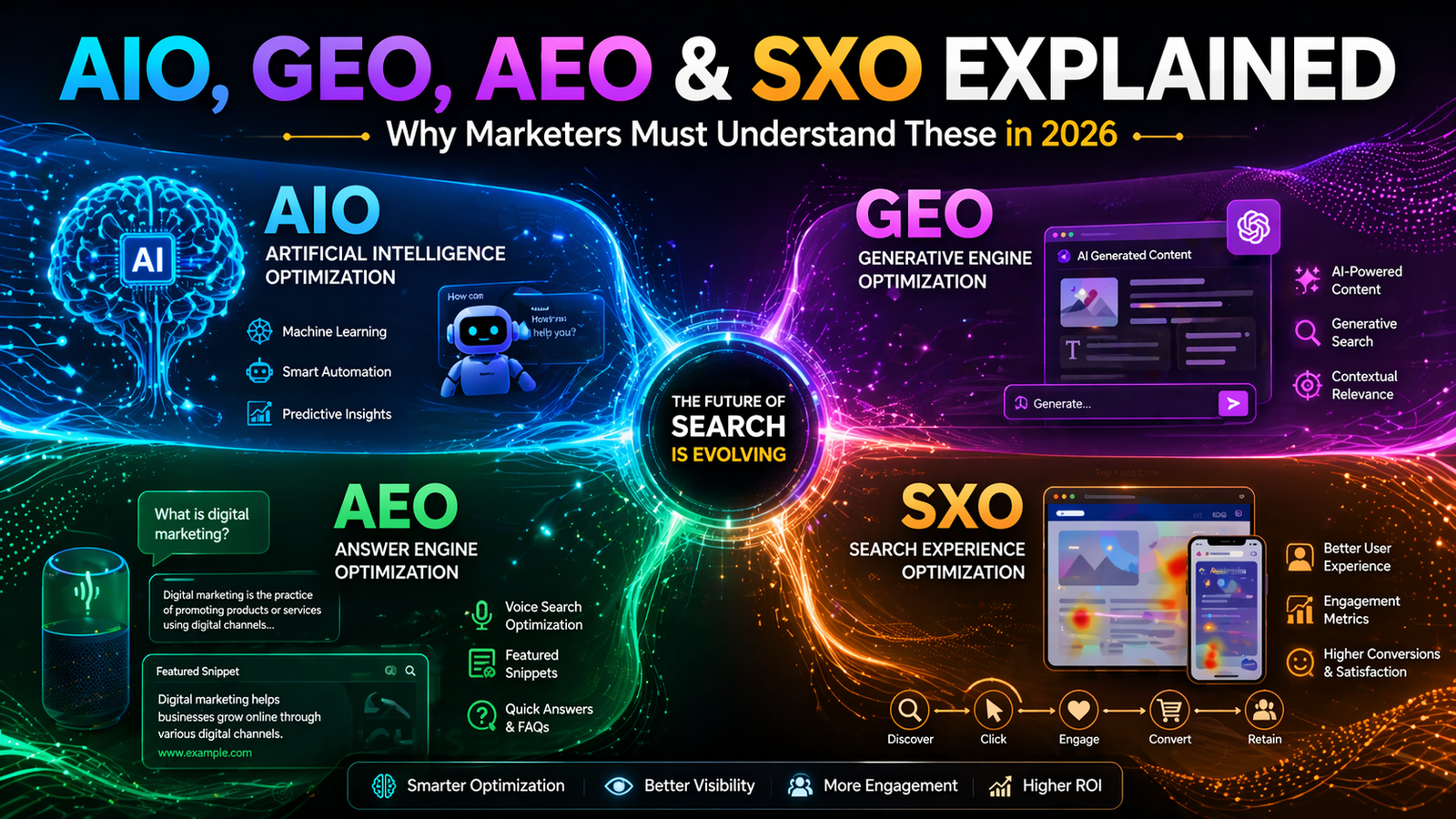 What AIO, GEO, AEO, and SXO Actually Mean — and Why Marketers Should Care
 Google Ads vs Meta Ads — Which Is Better for Your Business in 2026?
 On-Page SEO Checklist for 2026 (Step-by-Step Guide)
 What is GMB & How to Rank on Google My Business in 2026 (Complete Guide)
 Google Digital Garage: Courses List, Certificates & Career Opportunities
 Prompt Engineering for Digital Marketers: Boost AI Results