

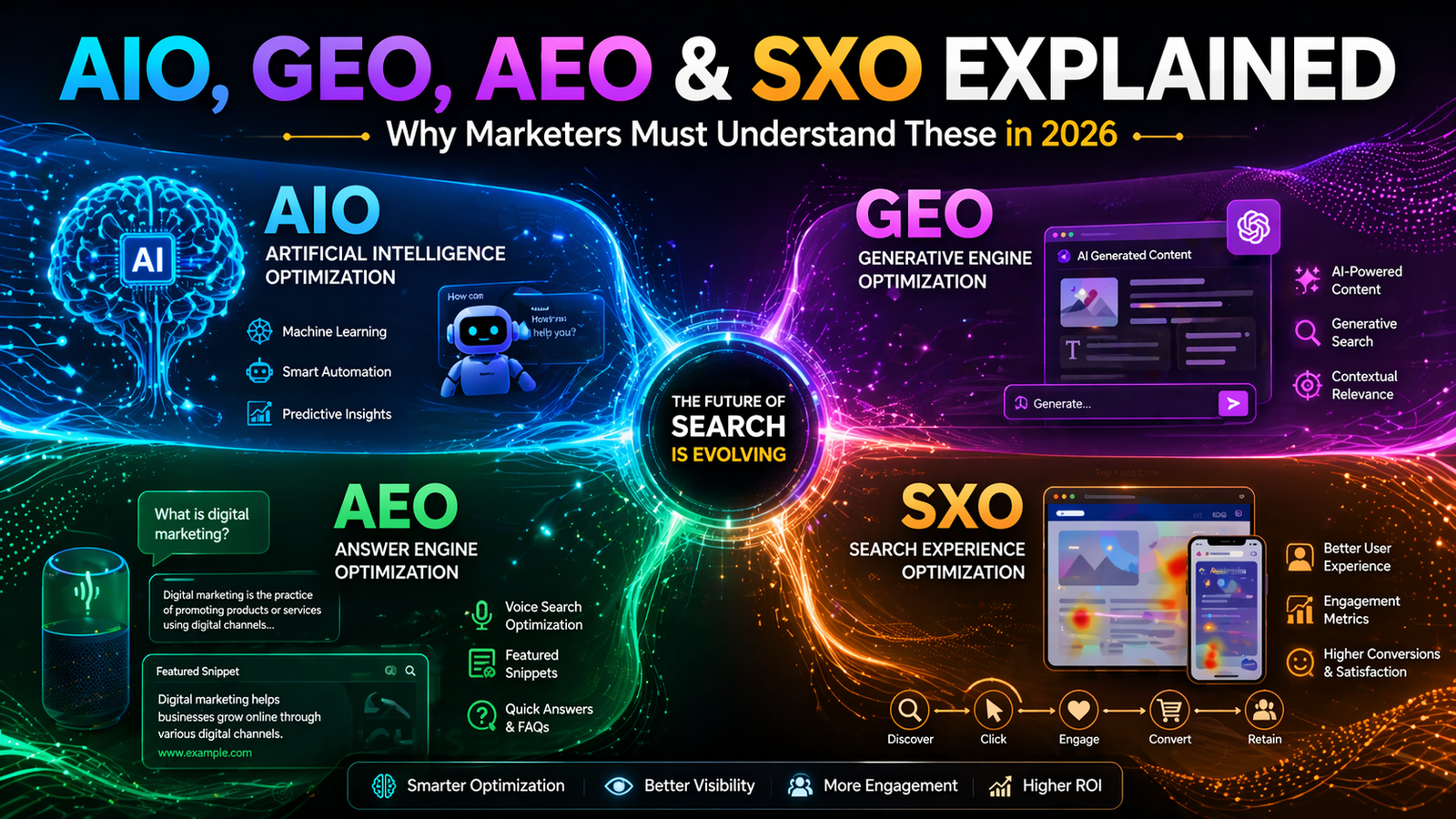
What AIO, GEO, AEO, and SXO Actually Mean — and Why Marketers Should Care
Think back to 2020. You wanted to rank on Google — you wrote a blog post, stuffed in some keywords, built a few backlinks, and waited. Simple.
Fast forward to 2026, and that playbook is almost unrecognizable.
Today, when someone types a question into Google, they often get a full AI-generated answer before they see a single organic result. When they ask ChatGPT or Perplexity for recommendations, your website might be mentioned — or completely invisible. When they speak to Alexa or Siri, one answer is read aloud. Yours, or a competitor's?
Search has fractured into multiple surfaces, multiple engines, and multiple formats. And if you are still only optimizing for the old version of Google, you are fighting a 2020 battle in a 2026 world.
This is why four new terms are taking over every serious digital marketing conversation right now: AIO, GEO, AEO, and SXO.
Not buzzwords. Not jargon. Real strategies that determine whether your content gets found — or gets buried.
Let's break them down, one by one, in plain English.
To understand which platform performs better for your business goals, compare reach, ROI, and targeting in our “Google Ads vs Meta Ads” guide before planning your paid marketing strategy.
First — What Happened to SEO?
SEO (Search Engine Optimization) is not dead. Let's be clear about that.
But SEO has evolved beyond recognition. In 2026, ranking on Page 1 of Google is no longer the finish line. It is barely the starting point.
Why? Because even if you rank #1 organically, a user might:
- Get their answer from Google's AI Overview before they ever see your result
- Ask ChatGPT or Perplexity instead of Google entirely
- Use voice search on their phone and hear one spoken answer
- Find your competitor mentioned in an AI-generated recommendation they never searched for
Traditional SEO covers none of these scenarios. That is exactly why AIO, GEO, AEO, and SXO exist — to cover the gaps that old-school SEO leaves wide open.
To ensure your website is fully optimized for rankings, readability, and search visibility, follow our “On-Page SEO Checklist” guide for step-by-step optimization of titles, headings, content, and technical SEO factors.
What Is AIO? (AI Overview Optimization)
AIO stands for AI Overview Optimization. It refers to the practice of optimizing your content to appear inside Google's AI-generated answer boxes — those blue-shaded summaries that now sit at the very top of many search results pages, above even the #1 organic result.
How Google AI Overviews Work
In 2023, Google launched AI Overviews (formerly called Search Generative Experience). Instead of just listing blue links, Google now reads multiple web pages and generates a summarized answer directly on the results page.
Here is why this matters: studies show that when an AI Overview appears, the majority of users read that answer and never click through to any website below it. Your #1 ranking suddenly becomes invisible traffic.
To understand how AI tools like ChatGPT, Gemini, and other models are transforming industries and career opportunities, explore our “Generative AI Certification Course” guide for complete learning paths and certification details.
How to Optimize for AIO
- Write in clear, direct answer formats. Google's AI pulls content that directly answers questions. Start sections with the question, follow immediately with the answer.
- Use structured data markup (Schema). This helps Google understand and categorize your content.
- Cover topics comprehensively. AI Overviews pull from pages that demonstrate depth and authority on a subject — not thin, surface-level posts.
- Target question-based queries. "What is...", "How does...", "Why should..." — these trigger AI Overviews more frequently than transactional keywords.
- Build topical authority. Having 10 interlinked articles on one subject signals expertise more strongly than 10 unrelated posts.
Real-World Example
A student searching "how long does a digital marketing course take" on Google in 2026 will likely see an AI Overview summarizing the answer from 3–5 websites. If your institute's content is structured to directly answer this question with clear data, you appear in that box — even if you are not ranked #1 below it.
I checked the latest SEO context for 2026 and your topic fits into step-by-step beginner SEO guides using free tools, AI SEO, and Google ecosystem updates
What Is GEO? (Generative Engine Optimization)
GEO stands for Generative Engine Optimization. It is the practice of optimizing your content to be cited, recommended, or mentioned by AI-powered search engines and chatbots — tools like ChatGPT, Perplexity AI, Microsoft Copilot, and Google Gemini.
Why GEO Is the Biggest Shift in Search History
For the first time ever, people are getting answers to their questions without opening a browser at all. They ask an AI. The AI responds. Done.
In 2026, a significant portion of product research, brand comparisons, and "best of" queries now happen inside ChatGPT and Perplexity — not on Google. These platforms do not show ranked lists of links. They generate narrative answers that mention brands and sources they consider authoritative.
If your website is not being referenced by these AI engines, you are missing an entirely new layer of search visibility.
To stay ahead in the evolving world of AI-powered search, learn how to use entity-based SEO, topical authority, and AI tools effectively in our “AI SEO Strategies 2026” guide for complete future-ready optimization techniques.
How to Optimize for GEO
- Publish data-rich, citable content. AI models are trained on content that contains original statistics, research findings, and expert insights. Generic content rarely gets cited.
- Get mentioned on high-authority sites. If Forbes, HubSpot, or Healthline writes about your brand or cites your data, AI models are far more likely to reference you.
- Write in a factual, encyclopedic tone for topic-defining pages. AI engines favour content that reads like an authoritative reference, not a sales page.
- Be consistent with your brand name across the web. NAP consistency (Name, Address, Phone) and consistent brand mentions signal legitimacy to AI training pipelines.
- Use long-form, well-structured content. Generative AI models favour pages with clear headers, definitions, examples, and logical flow.
Real-World Example
A business owner asks ChatGPT: "What is the best digital marketing institute in Delhi?" ChatGPT pulls from websites, articles, and forums it has been trained on. Institutes that have strong online mentions, detailed course pages, student testimonials, and coverage on education portals are far more likely to be recommended than those with thin digital footprints.
To understand how AI creates text, images, videos, and code using machine learning models, read our “What is Generative AI” guide for a simple beginner-friendly explanation and real-world use cases.
What Is AEO? (Answer Engine Optimization)
AEO stands for Answer Engine Optimization. It focuses on optimizing your content to deliver direct, concise answers — particularly for voice search, featured snippets, and any platform that reads a single answer aloud or displays it without requiring a click.
The Voice Search Reality
"Hey Siri, what is the salary of a digital marketer in India?"
Siri does not read out 10 results. It reads one. That answer comes from a webpage that is perfectly structured to answer the question directly, concisely, and authoritatively.
With smart speakers, phone assistants, and in-car voice search now embedded in daily life, the brand whose content gets read is the one that wins. AEO is the strategy that gets you there.
To understand how to improve your chances of getting cited in AI tools like ChatGPT, Perplexity, and Gemini, follow our “AEO Guide: Growing AI Citations & Visibility” which explains step-by-step strategies for optimizing content for AI-driven search engines.
How to Optimize for AEO
- Use FAQ sections on every important page. Voice assistants love pulling from FAQ-structured content because the question-answer format mirrors exactly what they need.
- Write concise answer paragraphs (40–60 words). The ideal featured snippet answer is direct and complete within 2–3 sentences.
- Target conversational, long-tail keywords. Voice searches are phrased like natural speech — "what is the fee for a digital marketing course in Delhi?" not just "digital marketing course fee."
- Implement structured data (FAQ schema, How-To schema). This signals to Google and voice engines that your content is answer-formatted.
- Answer the question in the first sentence. Do not bury the answer three paragraphs deep. Lead with it.
To understand how search is evolving beyond traditional SEO into AI-driven answers, featured snippets, and conversational search results, read our “Answer Engine Optimization: Future of SEO” guide for complete insights into how Google and AI tools are changing digital visibility.
Real-World Example
A user asks their phone: "What is the difference between SEO and SEM?" Your blog post has a clear H2 that says exactly that, followed by a 50-word paragraph that directly defines both. Google pulls that paragraph as the featured snippet, voice assistants read it aloud — and your brand gets heard without the user visiting your site.
That is AEO working in your favour.
What Is SXO? (Search Experience Optimization)
SXO stands for Search Experience Optimization. It is the fusion of traditional SEO with UX (User Experience Design) — optimizing not just to rank, but to ensure that every person who lands on your page has an experience so good they stay, engage, and convert.
Why SXO Is the Future of SEO
Here is something most people do not realize: Google does not just rank pages based on keywords and backlinks anymore. It watches what users do after they click.
If 1,000 people click your result and 800 of them immediately hit the back button (a high "bounce rate"), Google interprets this as a signal that your page did not satisfy the search intent. Your ranking drops.
If 1,000 people click, stay for 4 minutes, scroll to the bottom, and click your CTA — Google sees that as a strong satisfaction signal. Your ranking climbs.
SXO is the discipline of making this happen deliberately.
How to Optimize for SXO
- Match search intent perfectly. If someone searches "digital marketing course fees", they want a number — not a 500-word essay about why digital marketing matters. Give them what they came for immediately.
- Improve Core Web Vitals. Page load speed, visual stability, and interactivity are now direct Google ranking factors. A page that loads in 1 second outperforms an identical page that loads in 4 seconds.
- Write for humans, structure for algorithms. Short paragraphs, clear subheadings, bullet points, bold key phrases — all reduce cognitive load and keep users reading longer.
- Add internal links strategically. Guide users to the next logical page — a related article, a course page, a contact form. Every extra minute a user spends on your site sends a positive signal to Google.
- Make CTAs clear and low-friction. A confusing or hard-to-find call-to-action means lost conversions. SXO ensures that the path from "I'm interested" to "I've enquired" is as smooth as possible.
- Optimize for mobile-first. In India in 2026, over 80% of search traffic comes from mobile devices. A desktop-first design is a conversion killer.
Real-World Example
Two digital marketing institutes publish identical content about "best digital marketing courses in Delhi." Institute A has a fast-loading page, clear headings, a fee table, student video testimonials, and a sticky "Book Free Demo" button. Institute B has the same text buried in dense paragraphs on a slow-loading page with no clear next step.
Google watches. Institute A gets longer dwell time, more scroll depth, more CTA clicks. Over weeks, Google promotes Institute A's ranking and suppresses Institute B's — regardless of who had more backlinks.
That is SXO determining the winner.
How AIO, GEO, AEO, and SXO Work Together
Here is the big picture that most marketers miss: these four strategies are not separate disciplines. They are four layers of the same modern search visibility framework.
| Strategy | What It Optimizes For | Where It Shows Up |
| SEO | Keyword rankings | Google organic results |
| AIO | Google AI-generated summaries | AI Overview boxes on Google |
| GEO | AI chatbot citations | ChatGPT, Perplexity, Gemini, Copilot |
| AEO | Direct answers & voice search | Featured snippets, Siri, Alexa, Google Assistant |
| SXO | Post-click user experience | Your website — dwell time, conversions, rankings |
Think of it as a relay race:
GEO gets you mentioned in AI conversations → AEO gets you read aloud in voice searches → AIO gets you featured in Google's AI summaries → SEO gets you ranked in organic results → SXO converts that traffic into leads and customers.
Missing any one layer leaves a gap in your visibility. Covering all five makes your brand nearly impossible to ignore across every search surface that exists in 2026.
What This Means for Digital Marketers in India
If you are studying digital marketing, working in a marketing role, or running a business in India right now, this is the most important thing to understand:
The job description of a digital marketer has permanently changed.
Employers in 2026 are not just looking for someone who can write meta titles and build backlinks. They want marketers who understand how AI search works, how to structure content for voice, how to optimize user experience, and how to create content that AI engines want to cite.
The good news? These are learnable skills. The marketers who invest in learning them right now — before they become mainstream requirements — will have a significant career advantage for the next decade.
Frequently Asked Questions
Q1. What is the difference between SEO and AEO? SEO (Search Engine Optimization) focuses on ranking your pages in organic search results on Google. AEO (Answer Engine Optimization) goes a step further — it optimizes your content to be selected as the direct answer in featured snippets, voice search results, and AI answer boxes. In simple terms: SEO gets you on the list, AEO gets you read aloud.
Q2. What is GEO and why does it matter in 2026? GEO (Generative Engine Optimization) is the practice of making your brand and content visible inside AI-powered tools like ChatGPT, Perplexity, and Google Gemini. As more users shift from traditional search to AI assistants for product research and recommendations, GEO determines whether your brand gets mentioned — or completely ignored — in AI-generated responses.
Q3. Is AIO the same as Google's AI Overview? AIO as a strategy refers specifically to optimizing for Google's AI Overview feature — the AI-generated summary boxes that appear at the top of many Google search results pages. The goal of AIO optimization is to ensure your content is cited and included in these summaries, giving you visibility above the traditional #1 organic result.
Q4. How is SXO different from regular SEO? Traditional SEO focuses on getting users to your page — rankings, clicks, traffic. SXO (Search Experience Optimization) focuses on what happens after the click — page speed, content clarity, user journey, and conversion. In 2026, Google's algorithm directly measures user satisfaction signals like dwell time, scroll depth, and bounce rate, making SXO a direct ranking factor, not just a UX nicety.
Q5. Do I need to learn all four — AIO, GEO, AEO, and SXO — or just one? Ideally, all four — but they are deeply interconnected, so learning them together is more efficient than treating them separately. A well-structured, comprehensive piece of content that loads fast, answers questions directly, and builds topical authority will naturally score well across all four strategies simultaneously.
Q6. Are these strategies relevant for small businesses in India? Absolutely. In fact, small and local businesses in India stand to gain the most from AEO and GEO in 2026. Voice search is growing fastest in tier-2 and tier-3 cities, and AI tools are increasingly being used by Indian consumers to discover local services. A well-optimized small business can outperform large competitors in AI-generated results if its content is structured correctly.
Q7. Where can I learn AIO, GEO, AEO, and SXO in Delhi? Code With TLS covers all modern SEO strategies — including AI-era optimization — in its advanced digital marketing course. With hands-on training, live projects, and placement support, it is one of the most comprehensive digital marketing programmes available in Delhi NCR. Call 91 85278 66980 or visit our centre in Laxmi Nagar, New Delhi to book a free demo class.
Conclusion: The Search Game Has Changed. Have You?
SEO alone is no longer enough. The search landscape of 2026 spans Google's AI Overviews, ChatGPT recommendations, Siri voice answers, and on-page user experience signals — all simultaneously.
AIO gets you into Google's AI summaries. GEO gets you cited by AI chatbots. AEO gets you heard on voice search. SXO turns your traffic into real business results.
These are not advanced techniques reserved for enterprise brands with massive budgets. They are the new baseline for any marketer who wants to stay relevant — and they are completely learnable with the right training.
The marketers who understand this shift today will be the ones building successful careers and growing businesses throughout the rest of this decade.
🚀 Start your journey into modern digital marketing today. Code With TLS — India's leading digital marketing training institute — teaches you everything from foundational SEO to AIO, GEO, AEO, and SXO with real projects and guaranteed placement support.
📞 Call Us: 91 85278 66980 📧 Email Us: info@codewithtls.com 📍 Visit Us: 2/81-82, Ground Floor, Lalita Park, Gali No-2, Laxmi Nagar, New Delhi – 110092 🌐 Website: www.codewithtls.com
Enroll today. Your future in digital marketing starts here.
Recent Posts
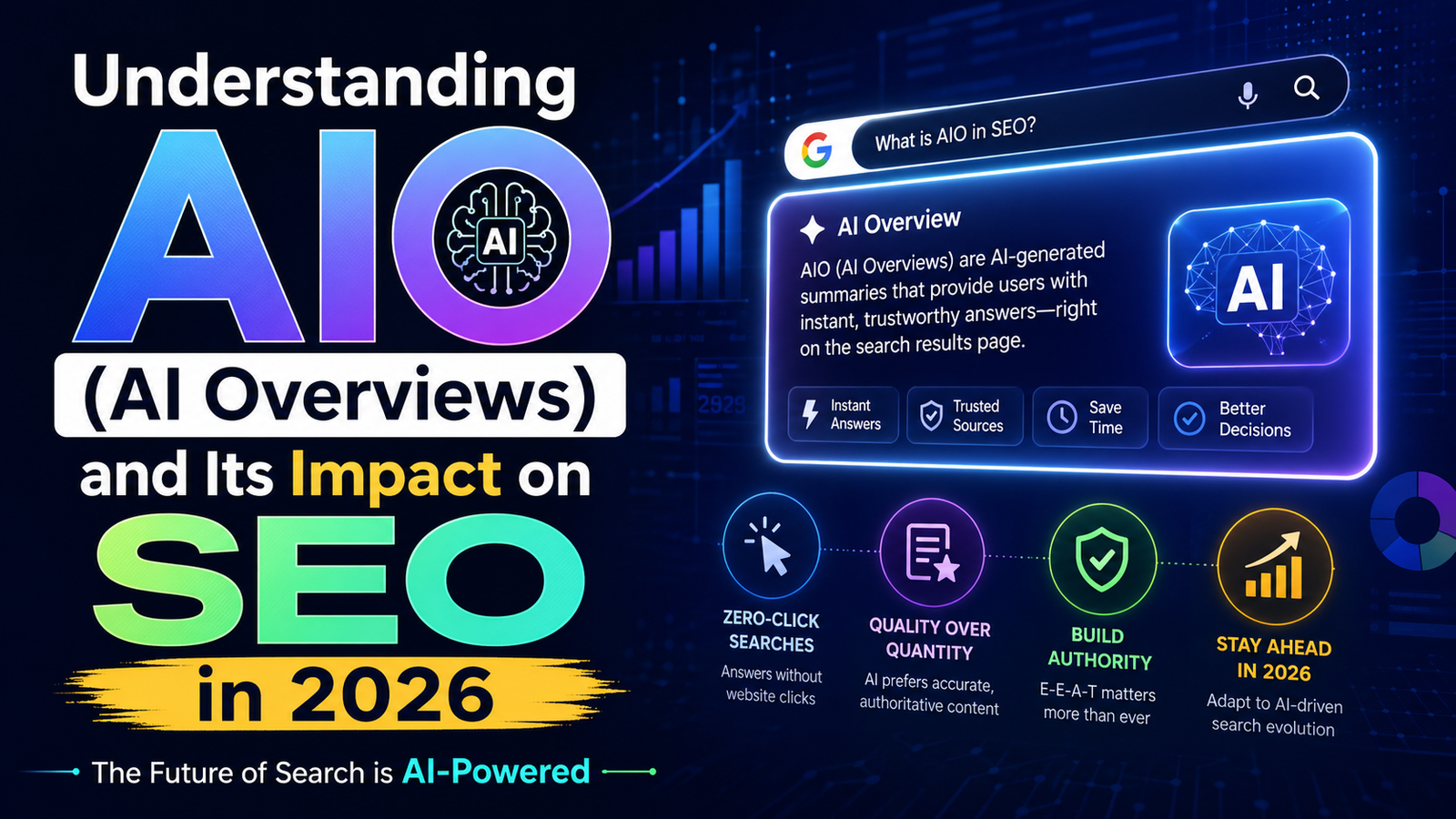 Understanding AIO (AI Overviews) and Its Impact on SEO in 2026
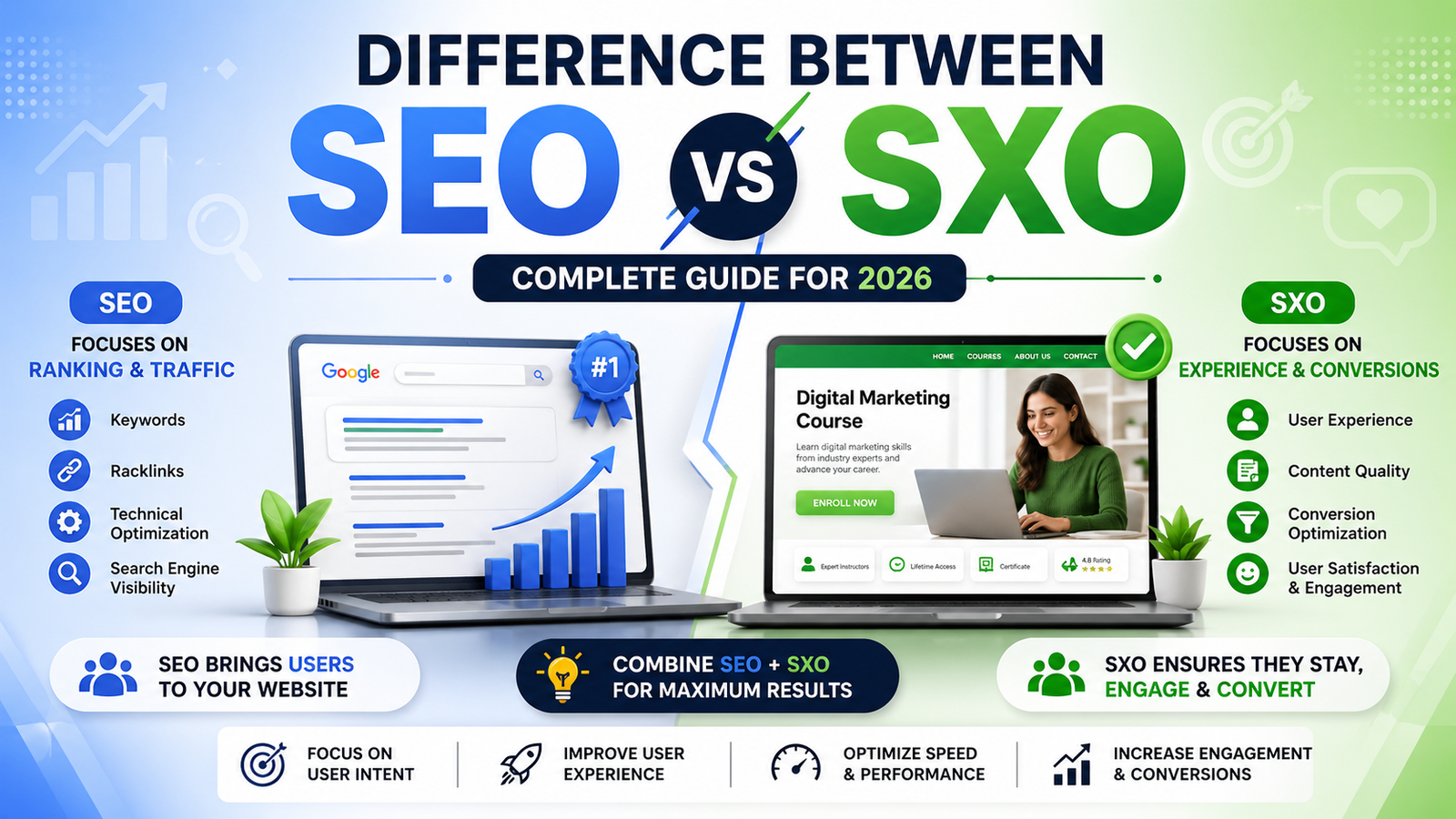 Difference Between SEO and SXO: Complete Guide for 2026
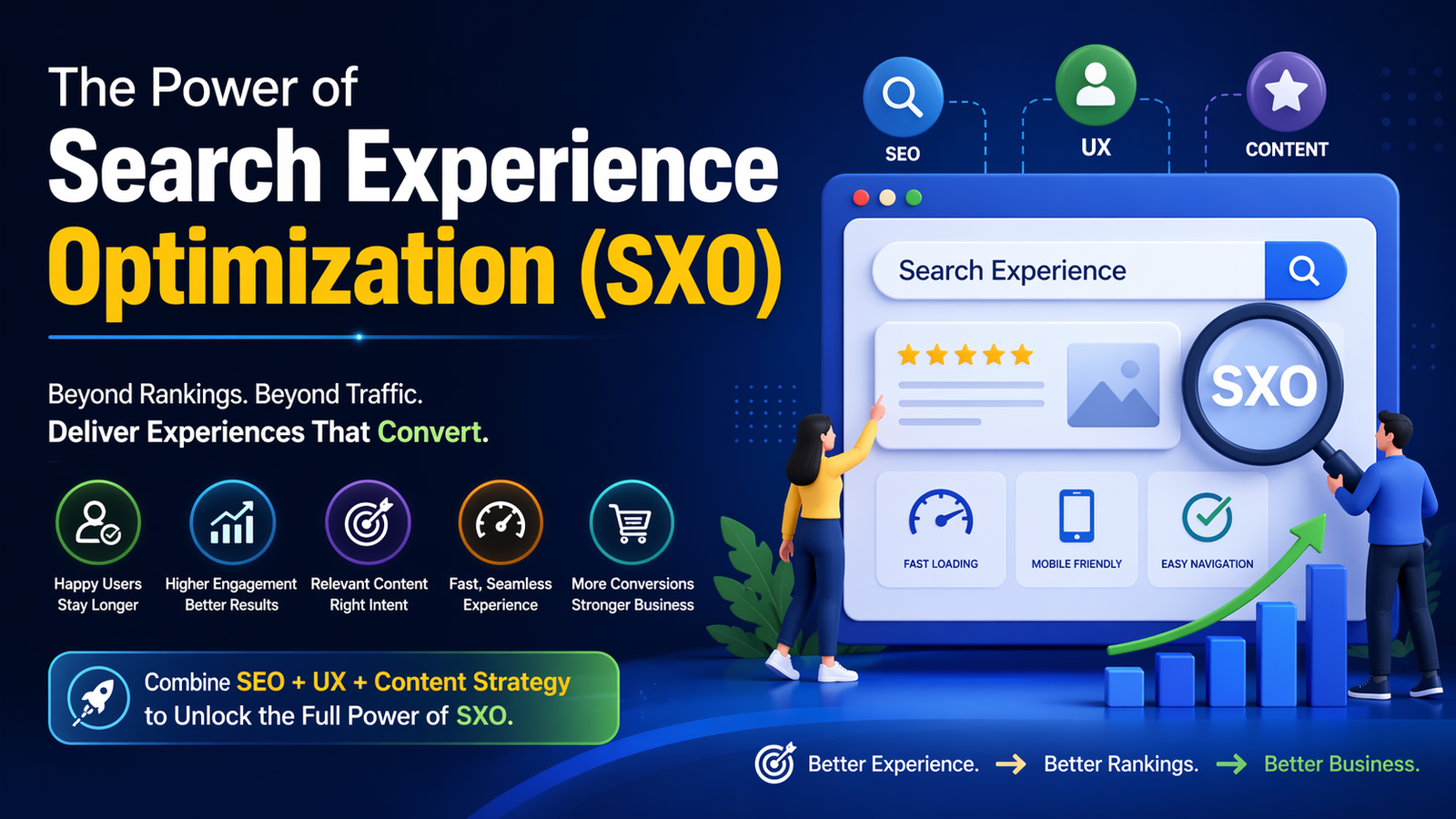 The Power of Search Experience Optimization (SXO)
 What is Agent Experience Optimization (AXO)? A Complete Guide for 2026
- What AIO, GEO, AEO, and SXO Actually Mean — and Why Marketers Should Care
 Google Ads vs Meta Ads — Which Is Better for Your Business in 2026?
 On-Page SEO Checklist for 2026 (Step-by-Step Guide)
 What is GMB & How to Rank on Google My Business in 2026 (Complete Guide)
 Google Digital Garage: Courses List, Certificates & Career Opportunities
 Prompt Engineering for Digital Marketers: Boost AI Results