
Generative Engine Optimization (GEO): The Future of Digital Marketing
Change is the only constant in today’s rapidly evolving digital marketing landscape. Keeping up with innovations isn’t just an option – it’s essential for staying competitive.
One of the most groundbreaking shifts today is Generative Engine Optimization (GEO), a strategy designed to optimize content for AI-driven search engines like ChatGPT, Perplexity, Gemini, Copilot, and Google’s AI Overviews. GEO is revolutionizing how people search, how businesses appear in results, and how digital marketing strategies are executed.
In this comprehensive guide, we’ll explore what GEO is, how it differs from SEO, why it’s important, and the key strategies you can use to stay ahead.
“Learn more about AI optimization in What is AEO.”
What is GEO?
GEO (Generative Engine Optimization) is the next big step in digital visibility. It’s the process of optimizing your website’s content so that it ranks not just on traditional search engines but also within AI-driven search and answer engines.
Unlike Google’s classic search results that show a list of links, generative AI systems deliver direct, synthesized answers to user queries. GEO ensures your brand is part of those answers, positioning you as a trusted authority in your niche.
With GEO, your business gains more than just clicks—it earns presence in the very responses people rely on.
Boost brand visibility in AI-generated answers
Attract highly targeted traffic from engaged users
Build lasting trust and loyalty with your audience
In short, GEO is about making sure when AI speaks, your brand is in the conversation.
To delve deeper into AI's transformative role in marketing, explore our article on the Future of AI in Digital Marketing
GEO vs. SEO: Key Similarities and Differences
When it comes to digital visibility, both SEO (Search Engine Optimization) and GEO (Generative Engine Optimization) share the same core mission: making your content easier to find. The difference lies in where and how that visibility happens.
Similarities Between SEO & GEO
- Boosting visibility & reach – Both aim to put your brand in front of the right audience.
- Keyword & semantic optimization – Language, intent, and clarity matter in both.
- User experience & E-E-A-T – Experience, Expertise, Authoritativeness, and Trustworthiness drive results across both worlds.
- Data-driven strategies – Analytics guide content performance and future improvements.
- Constant adaptation – Both evolve with changing algorithms and platform updates.
Key Differences Between SEO & GEO
- Search platforms: SEO targets Google and Bing; GEO is tailored for AI-driven answer engines.
- Results delivery: SEO ranks pages and shows links; GEO generates direct, conversational answers.
- Content optimization: SEO focuses on keywords, meta tags, and backlinks; GEO emphasizes context, entity recognition, and natural language flow.
- Performance metrics: SEO measures rankings and traffic; GEO tracks AI citations, inclusion in generated responses, and referral impact.
SEO isn’t going anywhere—it’s still essential for Google-driven discovery. But GEO is the next frontier, ensuring your brand gets featured in AI-powered answers. When combined, they create a future-proof strategy for visibility across both traditional search engines and AI-driven platforms.
To further enhance your understanding of AI's impact on marketing, explore our article on Digital Marketing Course with AI
Why GEO is Important
The way people search is evolving—and so should your strategy.
- Traditional search is shrinking: Gartner projects that by 2026, traditional search volume will drop by 25%, making old-school SEO alone less effective.
- Organic traffic risks decline: With AI-driven platforms rising, brands could see a 50%+ reduction in organic website traffic if they don’t adapt.
- AI wins user trust: Over 70% of users already rely on AI-powered answers over traditional search results, valuing speed and accuracy.
- Shift to AI-first discovery: Platforms like ChatGPT, Perplexity, and Gemini are becoming go-to destinations for instant, context-rich answers.
The takeaway? GEO isn’t optional—it’s the future. Brands that embrace Generative Engine Optimization today will safeguard their visibility tomorrow.
"Learn how to boost your content creation efficiency with our guide on Best AI Tools for Content Creation.”
Benefits of GEO
Wider Reach – Expand beyond Google and get discovered across AI-driven platforms like ChatGPT, Gemini, and Perplexity.
Enhanced User Experience – AI-powered answers are fast, personalized, and context-rich, making your brand the go-to choice.
Competitive Edge – Be among the first to master GEO and stay steps ahead of competitors still stuck in traditional SEO.
Brand Authority – When AI cites your content as a source, it signals credibility and positions your brand as a trusted leader.
Data-Driven Insights – Gain valuable visibility into how AI systems interpret, use, and highlight your content.
Future-Proofing – Adapt now and ensure your brand thrives as search rapidly shifts to AI-first experiences.
"To explore more about AI's evolving role in digital marketing, check out our article on Latest AI Trends in 2025.”
How Generative AI/Answer Engines Work
Generative AI engines don’t just “search” — they think, synthesize, and deliver. Here’s the behind-the-scenes process:
- Data Collection: They pull information from countless sources across the web.
- Preprocessing: The data is cleaned, organized, and structured for accuracy.
- Training & Understanding: AI models learn language, context, and intent — not just keywords.
- Answer Generation: Instead of showing 10 blue links, AI blends insights from multiple sources to deliver a direct, conversational response.
- Prioritization: Engines give more weight to content that’s clear, credible, structured, and authoritative.
This is why GEO (Generative Engine Optimization) isn’t optional — your content needs clarity, trustworthiness, and authority if you want AI to choose your brand in its answers.
"Wondering if a digital marketing course is worth it? Read our detailed guide on Is Digital Marketing Course Useful”
How GEO Works
Generative Engine Optimization (GEO) isn’t just about ranking — it’s about teaching AI to trust, select, and surface your content. To succeed, you need to master eight key pillars:
1. AI Research & Analysis
Understand how answer engines “think.” Study how platforms format responses, cite sources, and prioritize certain styles of content.
2. Content Quality & Relevance
Deliver accurate, complete, and intent-driven answers. The clearer your response, the higher the chance AI will feature it.
3. Content Structure & Clarity
Use headings, lists, schema, and direct Q&A formats. Structured content makes it easier for AI to extract and present your expertise.
4. Content Distribution & Engagement
Don’t just publish — circulate. Share across websites, communities, and social platforms to build digital footprints that AI can trace back to your brand.
5. Brand Authority & Credibility
Back claims with citations, expert quotes, data, and consistent branding. Engines favor trusted voices with proven expertise.
6. Technical SEO
AI still relies on the fundamentals: fast load times, mobile responsiveness, and structured data. Without this foundation, visibility suffers.
7. Experiment & Iterate
GEO is evolving daily. Test different formats, compare outputs, and adapt to what engines reward most.
8. Ongoing Optimization
Think of GEO as a long-term game. Regularly refine, update, and expand your content to maintain visibility in AI-driven answers.
"To explore more about AI's evolving role in digital marketing, check out our article on Artificial Intelligence in Digital Marketing 2025”
Future Potential of GEO
The future of Generative Engine Optimization (GEO) is nothing short of transformational. As search evolves, GEO will unlock new possibilities that redefine how people discover and interact with information.
- Voice & Visual Search – Users will increasingly rely on conversational queries and image recognition, making it essential to optimize beyond text.
- Hyper-Personalization – AI will deliver results uniquely tailored to each individual’s behavior, context, and preferences.
- Multimodal Search – Text, images, video, and audio will merge into a single, seamless search experience.
- Seamless Integration – GEO will connect with AR, real-time assistance, and predictive answers, helping users make decisions faster than ever.
Brands that start adopting GEO today won’t just adapt to the future they’ll shape the digital landscape of tomorrow.
To explore more about the affordability and flexibility of digital marketing education, check out our article on Digital Marketing Course in EMI
Key Takeaway
GEO isn’t here to replace SEO — it’s here to elevate it.
Think of SEO as the foundation and GEO as the next level of growth. By optimizing for both, you ensure your brand dominates across traditional search engines and AI-driven platforms alike.
The sooner you adapt, the sooner you’ll create a future-proof strategy that keeps you one step ahead of competitors and positions your brand where your audience is already searching
Learn & Grow with Code with TLS
At Code with TLS, we empower businesses, students, and professionals to master the latest digital marketing strategies — from SEO fundamentals to the emerging power of GEO optimization. Our industry-driven courses are designed to give you practical, hands-on skills that help you thrive in today’s fast-changing digital landscape.
Address: 2/81-82, Ground Floor, Lalita Park, Gali No - 2, Laxmi Nagar, New Delhi - 110092
Call Us: +918527866980
Email: info@codewithtls.com
Have questions or want to get started? Visit our Contact Us Page.
FAQs on Generative Engine Optimization (GEO)
Q1. What is Generative Engine Optimization (GEO)?
A1. Generative Engine Optimization (GEO) is the process of optimizing your content for AI-driven search engines like ChatGPT, Perplexity, Google AI Overviews, and Microsoft Copilot. The goal is to ensure your brand appears in AI-generated answers and summaries where users increasingly seek information.
Q2. How is GEO different from SEO?
A2. Traditional SEO focuses on ranking higher on search engine results pages (SERPs), while GEO focuses on getting featured within synthesized, conversational answers provided by AI platforms. In short, SEO is about visibility on search engines, GEO is about visibility in AI responses.
Q3. Why is GEO important in 2025 and beyond?
A3. As search behavior shifts toward AI platforms, GEO ensures that your brand isn’t left out. Being cited in AI-driven responses builds visibility, trust, and credibility where users are actively looking for quick, reliable answers.
Q4. Do I need to replace SEO with GEO?
A4. No. GEO is not a replacement for SEO but a complement. SEO helps with discoverability in traditional search, while GEO ensures brand presence in AI-powered search. Together, they create a holistic digital strategy.
Q5. What platforms use GEO?
A5. GEO is relevant for AI-driven platforms such as ChatGPT, Google AI Overviews, Microsoft Copilot, Perplexity, and Gemini, all of which generate summarized, conversational answers.
Q6. What strategies are key for GEO success?
A6. To optimize for GEO, focus on:
- Clear and authoritative content
- Verified citations and references
- Strong brand mentions across the web
- Structured data for context
- Understanding how AI systems extract and synthesize responses
Q7. How do I track GEO performance?
A7. Measure GEO success by monitoring referral traffic from AI platforms, tracking citation mentions, analyzing inclusion in AI-generated answers, and assessing overall brand visibility in conversational search.
Q8. Does GEO require technical SEO?
A8. Yes. Technical SEO is still essential. Proper site structure, crawlability, schema markup, and structured data improve the chances of your content being understood and cited by AI engines.
Q9. Can GEO improve brand authority?
A9. Absolutely. Being cited in AI-driven engines builds your reputation as a trusted authority. Brands featured in synthesized AI responses gain higher credibility in the digital ecosystem.
Q10. Is GEO the future of digital marketing?
A10. Yes. GEO is rapidly shaping the future of digital marketing. As AI-driven search dominates, brands that adapt early to GEO will have a significant competitive advantage.
Recent Posts
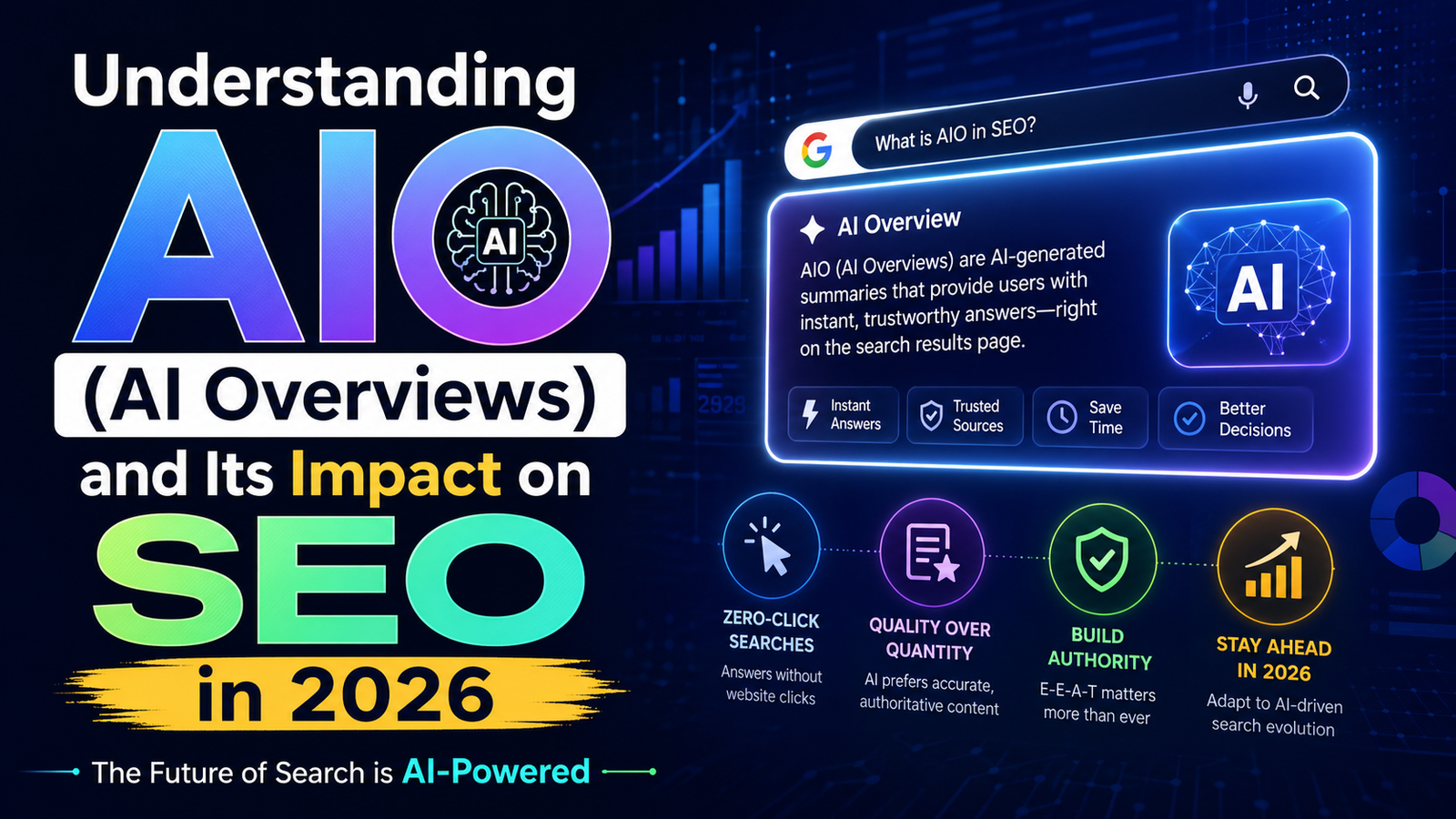 Understanding AIO (AI Overviews) and Its Impact on SEO in 2026
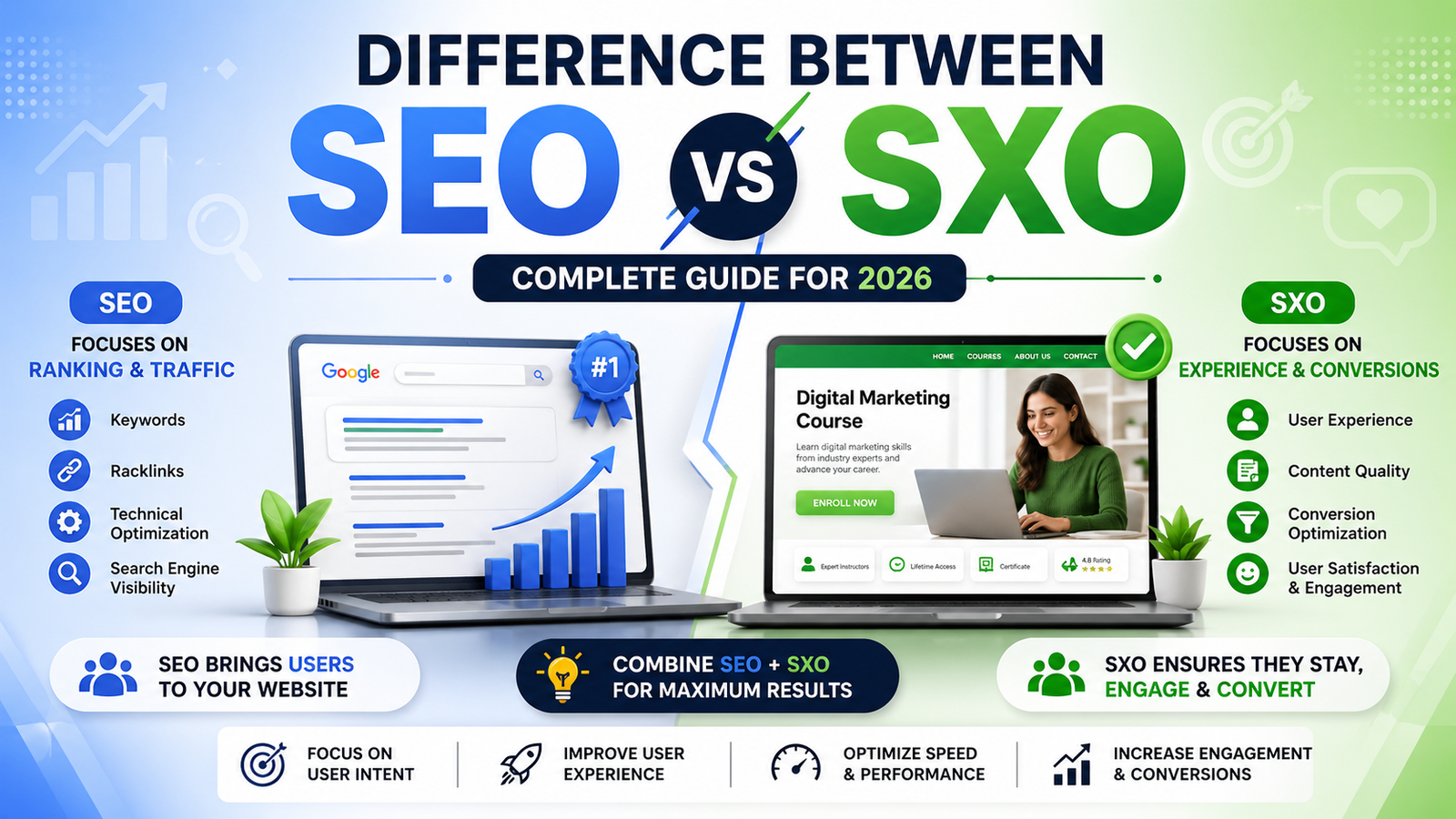 Difference Between SEO and SXO: Complete Guide for 2026
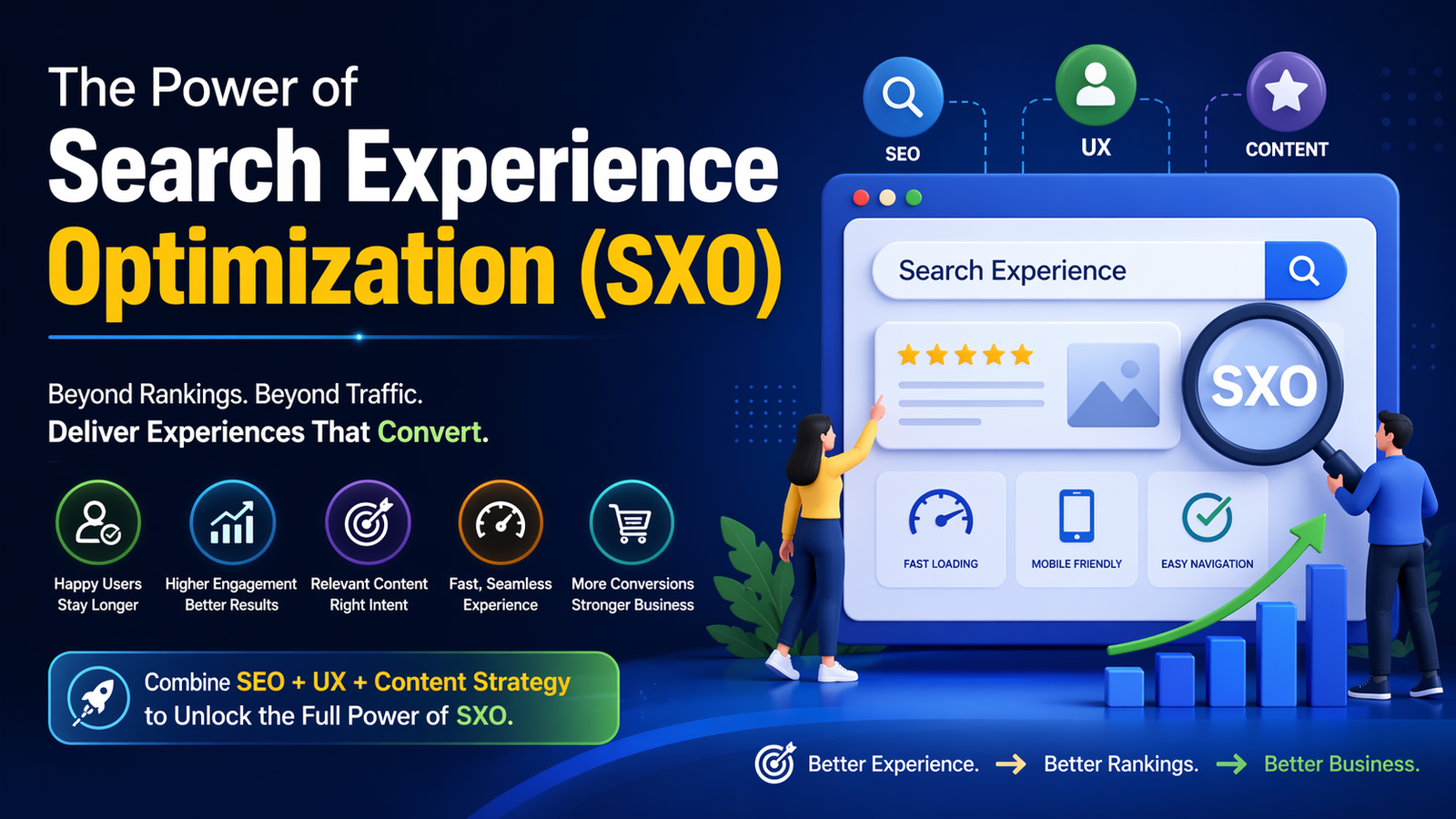 The Power of Search Experience Optimization (SXO)
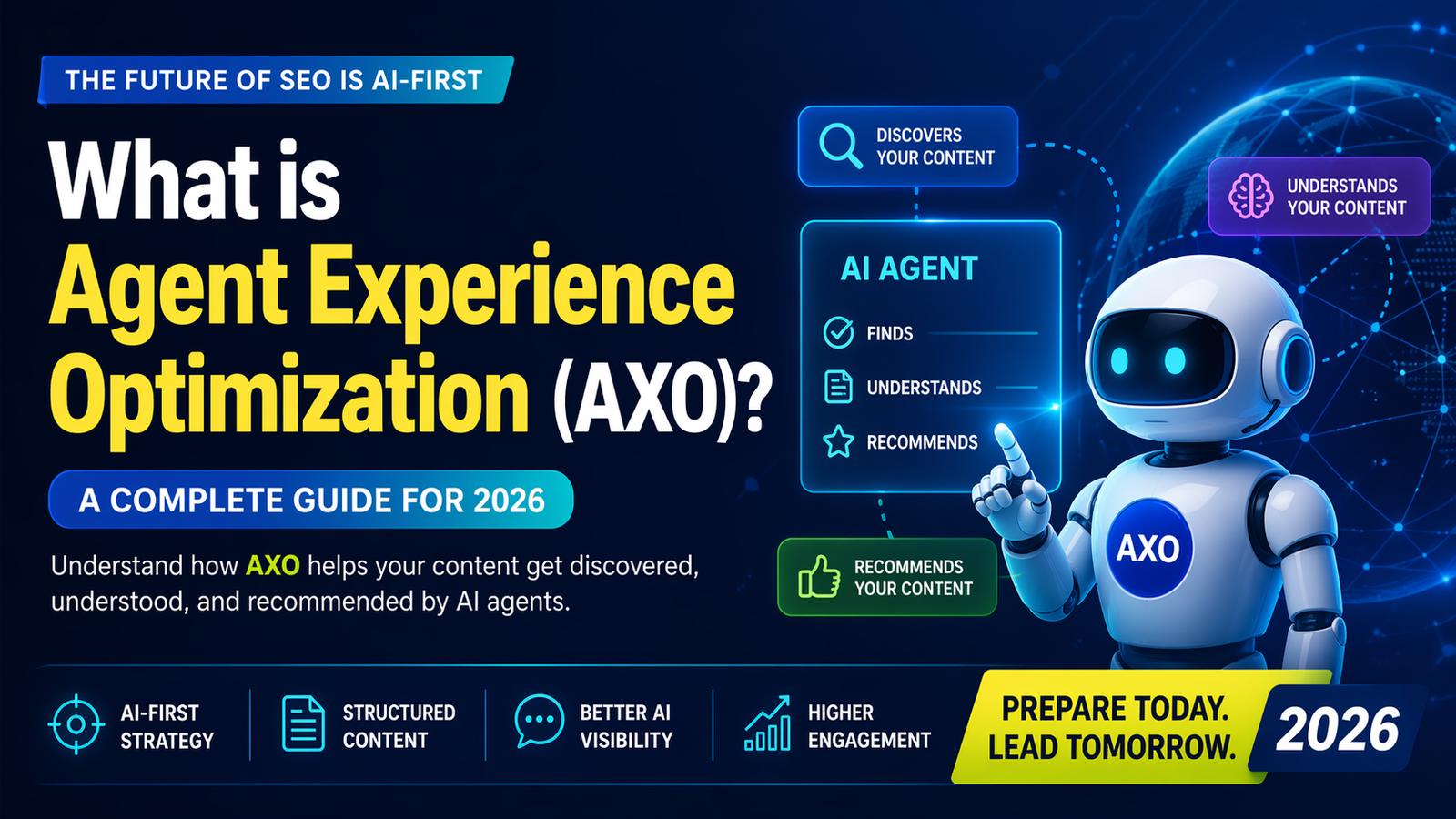 What is Agent Experience Optimization (AXO)? A Complete Guide for 2026
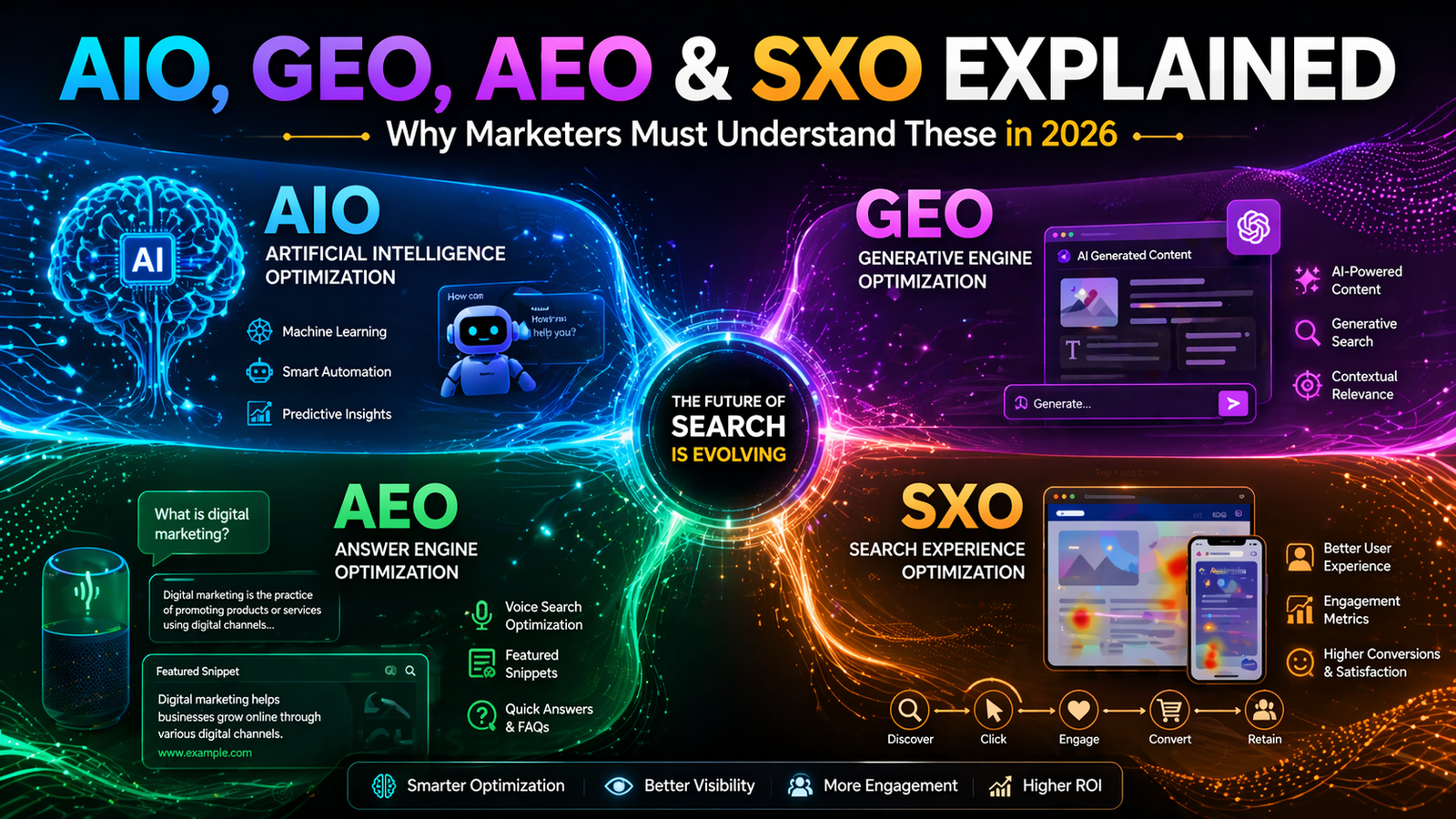 What AIO, GEO, AEO, and SXO Actually Mean — and Why Marketers Should Care
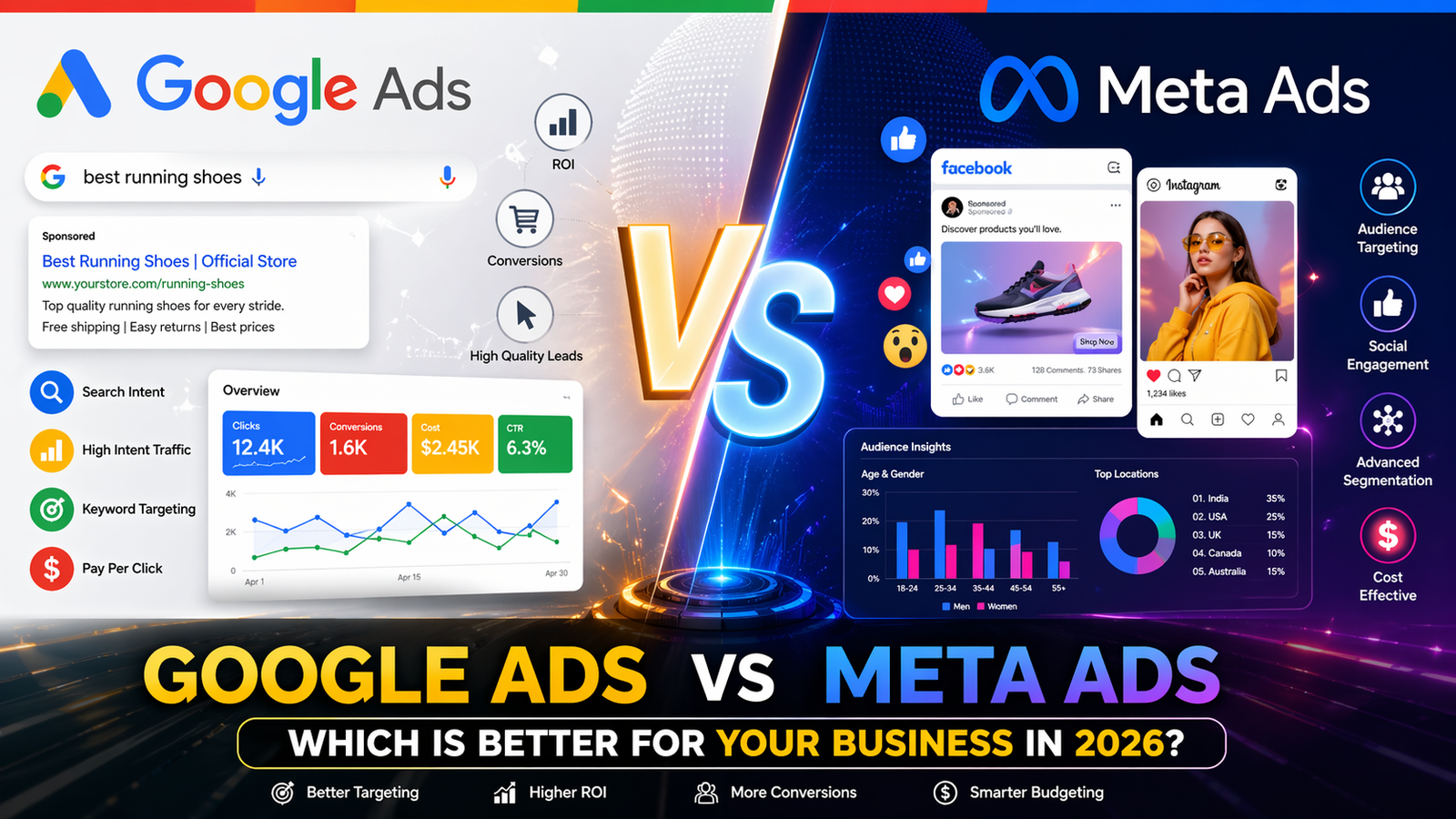 Google Ads vs Meta Ads — Which Is Better for Your Business in 2026?
 On-Page SEO Checklist for 2026 (Step-by-Step Guide)
 What is GMB & How to Rank on Google My Business in 2026 (Complete Guide)
 Google Digital Garage: Courses List, Certificates & Career Opportunities
 Prompt Engineering for Digital Marketers: Boost AI Results